
Materials management is an integrated corporate function that governs the procurement, storage, distribution, and utilization of physical resources to eliminate supply chain redundancies, reduce capital lock-up, and secure operational cost control across upstream and downstream petroleum facilities.
Petroleum exploration, drilling, and refining depend upon continuous access to specialized equipment, drilling fluids, safety gear, and replacement parts. When organizations fail to synchronize supply streams with active extraction schedules, they experience severe operational bottlenecks.
Materials management establishes systematic governance over every item entering a facility. It eliminates fragmented purchasing habits across departments.
Enterprise decision-makers utilize this discipline to transform reactive purchasing into a strategic asset. Organizations deploy structured workforce training programs—such as those delivered by the Institute For Oil & Gas Training—to equip supply chain professionals, procurement managers, and operations engineers with the exact competencies required to manage complex inventory networks.
Workforce development in this domain addresses critical employee skill gaps regarding vendor evaluation, stock classification, and warehouse optimization. Teams learn to replace intuition with rigorous data analytics.
As a result, organizations maintain precise control over capital expenditures while safeguarding uninterrupted operational workflows across hazardous work environments.
How do organizations execute materials management training and implement cost control protocols?
Organizations execute materials management training through structured, outcome-based professional development frameworks that combine technical workshops, live simulation exercises, and continuous performance assessments to align employee capabilities with corporate financial goals.
Implementing this discipline requires a deliberate transition from unstructured warehousing to integrated supply chain management. L&D professionals deploy hybrid learning models that blend self-paced online modules with intensive instructor-led workshops.
This approach minimizes disruption to active petroleum operations.
Learning methodologies emphasize case-based learning and interactive simulations. Professionals examine real-world logistical failures from global oil and gas projects to understand the financial consequences of stockouts and overstocking.
During training sessions, teams analyze historical procurement data to identify cost-leakage points. They master ABC inventory classification methods, which categorize assets based on consumption value and supply risk.
Organizations implement these standardized processes across departments through cross-functional collaboration. Procurement specialists, warehouse supervisors, and finance controllers participate in joint training modules.
This collaborative design breaks down operational silos.
Participants learn to utilize enterprise resource planning software to track stock movements and automate reorder thresholds. The implementation phase concludes with post-training performance evaluations.
Organizations track specific key performance indicators to measure behavioral change and operational improvement. Teams that master these methodologies routinely achieve significant reductions in carrying costs and emergency shipping expenses.
What core components, skills, and learning frameworks define effective materials management programs?
Effective materials management programs incorporate quantitative inventory valuation techniques, vendor performance scorecards, enterprise resource planning tools, and strategic negotiation frameworks delivered through immersive professional development curricula.
Comprehensive training frameworks integrate both technical proficiencies and strategic decision-making capabilities.
Program modules cover critical topics such as demand forecasting, warehouse design, logistics optimization, and regulatory compliance. Professionals study advanced concepts related to Inventory Valuation, Stock Movements and Materials Costing in Oil & Gas Operations to understand how minute stock adjustments impact overall balance sheets.
Learning formats leverage diverse delivery mechanisms to maximize knowledge retention. Organizations utilize role-play exercises to train procurement teams in vendor negotiation and contract management.
Simulated supply chain disruptions test a participant's ability to maintain material flow under strict budget constraints.
Technical components focus heavily on data literacy. Trainees learn to interpret inventory turnover ratios, carrying cost percentages, and lead-time variability metrics.
By mastering these analytical tools, employees identify obsolete stock and execute timely liquidation strategies.
Furthermore, training curricula emphasize safety and quality assurance. Personnel learn to inspect incoming tubular goods, drilling bits, and safety apparatuses against stringent industry standards.
This rigorous adherence prevents equipment failure on site, protecting both workforce well-being and capital investments.
What measurable organizational benefits and performance outcomes emerge from structured workforce development?
Structured workforce development in materials management delivers measurable performance outcomes including a 15 to 25 percent reduction in overall inventory carrying costs, a 30 percent decrease in equipment downtime, and a demonstrable improvement in cross-departmental operational efficiency.
When enterprises invest in targeted capability building, the financial returns manifest rapidly across operational ledgers.
Trained professionals apply precise forecasting models that prevent excess capital accumulation in stagnant warehouse stock. This optimization frees up corporate liquidity for strategic investments in exploration and technological innovation.
Operational efficiency improves as internal requisition cycles accelerate. Departments experience fewer project delays caused by material shortages.
Organizations observe enhanced compliance with safety regulations and environmental standards, which minimizes the financial risk of regulatory penalties.
Performance metrics extend beyond financial savings into workforce stability. Companies providing rigorous professional development report higher employee retention rates and stronger internal leadership pipelines.
Employees possess the confidence and technical expertise to manage complex vendor ecosystems without constant managerial oversight.
When teams operate with shared frameworks and clear performance expectations, organizational friction diminishes. The enterprise achieves a resilient, agile supply chain capable of withstanding commodity price volatility and global market disruptions.
How do diverse corporate teams, managers, and petroleum sectors apply materials management practices?
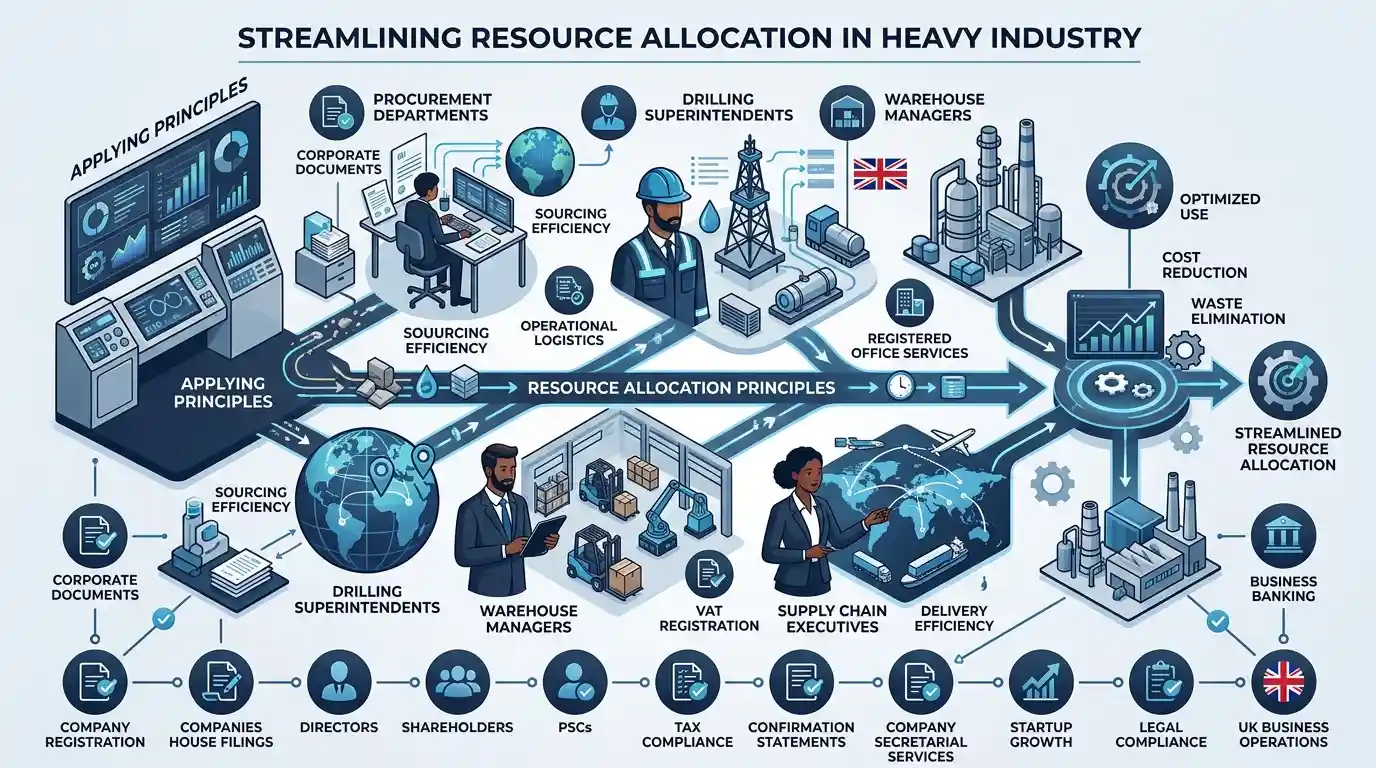
Diverse corporate teams, including procurement departments, drilling superintendents, warehouse managers, and supply chain executives across sectors like oil and gas exploration, petrochemical refining, and heavy manufacturing, apply these principles to streamline resource allocation.
In upstream petroleum exploration, remote drilling sites require flawless logistical synchronization. A single missing valve halts multi-million-dollar drilling operations.
Drilling superintendents utilize structured inventory protocols to maintain critical spare parts on hand while eliminating redundant stock.
Midstream pipeline operators apply these methodologies to manage extensive maintenance schedules across thousands of miles of infrastructure. Procurement teams negotiate volume-based contracts with certified vendors, securing lower unit costs for high-consumption materials.
Downstream petrochemical refineries rely on rigorous materials governance to manage catalysts, chemicals, and maintenance supplies. Warehouse managers implement strict stock rotation policies to prevent the degradation of sensitive chemical compounds.
Corporate leadership teams review aggregated materials data to formulate long-term capital allocation strategies.
By analyzing consumption patterns across multiple operational sites, decision-makers identify systemic inefficiencies and standardize best practices enterprise-wide.
This systematic application ensures that every facility operates at peak resource efficiency, supporting sustainable corporate growth and competitive market positioning.
What common problems and misconceptions undermine corporate training initiatives in petroleum supply chains?
Common problems undermining corporate training initiatives include the deployment of generic, theoretical programs lacking industry context, the absence of post-training reinforcement, and a failure to tie learning outcomes to measurable operational key performance indicators.
Many organizations approach professional development as an administrative checkbox rather than a strategic lever. They procure off-the-shelf training packages that feature irrelevant case studies and abstract theories.
Participants struggle to map generic supply chain concepts to the specific regulatory and logistical complexities of petroleum operations.
Another critical flaw involves the absence of application reinforcement. When employees complete a workshop but return to legacy workplace environments without updated tools or managerial support, old habits quickly resurface.
Training investments yield negligible ROI when organizations fail to align learning objectives with business metrics.
Furthermore, companies frequently neglect the baseline assessment phase. Delivering advanced inventory costing modules to teams lacking fundamental data literacy guarantees poor comprehension and disengagement.
Effective capability building requires precise diagnostic evaluations to identify exact skill gaps before curriculum design begins.
Organizations overcome these pitfalls by partnering with specialized providers that deliver practical, outcome-based programs tailored to real-world corporate realities.
By enforcing continuous learning cultures and tracking performance metrics diligently, enterprises transform professional development from a cost center into a primary driver of operational excellence.
Frequently Asked Questions
What is oil and gas petroleum accounting and how does it differ from standard financial accounting?
Oil and gas petroleum accounting is a specialized discipline governed by strict regulatory frameworks like successful efforts and full cost methods to track complex exploration, development, and production expenditures. Unlike standard financial accounting, it requires specialized valuation treatments for depletion, amortization, and joint interest billings across high-risk capital ventures. Programs at the Institute For Oil & Gas Training equip finance professionals with the exact technical competencies needed to manage these intricate upstream cost pools.
How do petroleum accountants handle joint venture auditing and cost-sharing agreements?
Petroleum accountants manage joint venture auditing by meticulously verifying joint interest billings and ensuring operating partners comply strictly with complex operating agreements. They reconcile capital and operating expenditures against authorized authorizations for expenditure to prevent cost-allocation disputes among consortium partners. The Institute For Oil & Gas Training delivers practical learning modules that train corporate finance teams to execute these audits with absolute financial transparency.
What are the primary methods used for petroleum exploration and production cost accounting?
Exploration and production cost accounting relies primarily on either the successful efforts method, which capitalizes only discoveries leading to commercial reserves, or the full cost method, which capitalizes all acquisition and exploration costs within a designated cost centre regardless of drilling success. Organizations rely on specialized professional development from the Institute For Oil & Gas Training to help accountants master these contrasting valuation models and their direct balance sheet impacts.
Why is depletion accounting critical for financial reporting in upstream petroleum operations?
Depletion accounting is essential in upstream petroleum operations because it systematically allocates the capitalized acquisition and development costs of oil and gas reserves against actual physical extraction over time. This vital calculation ensures corporate financial statements accurately reflect asset depreciation and remaining subterranean reserve value in alignment with international reporting standards. Finance leaders utilize targeted courses from the Institute For Oil & Gas Training to enhance accuracy in reporting these complex capital write-downs.
How can energy companies improve financial compliance through oil and gas petroleum accounting training?
Energy companies significantly improve financial compliance by enrolling their accounting personnel in specialized oil and gas petroleum accounting training that demystifies complex regulatory mandates, royalty calculations, and production-sharing contracts. Rigorous, outcome-based professional development eliminates reporting errors, minimizes audit adjustments, and ensures adherence to global tax frameworks. The Institute For Oil & Gas Training provides industry-aligned programs that bridge theoretical accounting standards with real-world energy sector execution.
Related training courses
Petroleum Industry Accounting Fundamentals: Successful Efforts vs Full-Cost Training Course
- Specialisation
- Oil & Gas Petroleum Accounting
- Duration
- 5 days · 15 CPD hours
Upstream Cost Classification for Recoverability & JV Chargeability Training Course
- Specialisation
- Oil & Gas Petroleum Accounting
- Duration
- 5 days · 15 CPD hours
Inventory & Materials Accounting for Hydrocarbon Stock Valuation Training Course
- Specialisation
- Oil & Gas Petroleum Accounting
- Duration
- 5 days · 15 CPD hours
More articles

Oilfield Economics & Project Evaluation: Specialist Training for Petroleum Economics and Commercial Roles
Master petroleum economics and project evaluation with specialized training. Learn cash flow modeling, risk analysis, and fiscal contracts for upstream roles.
Read article →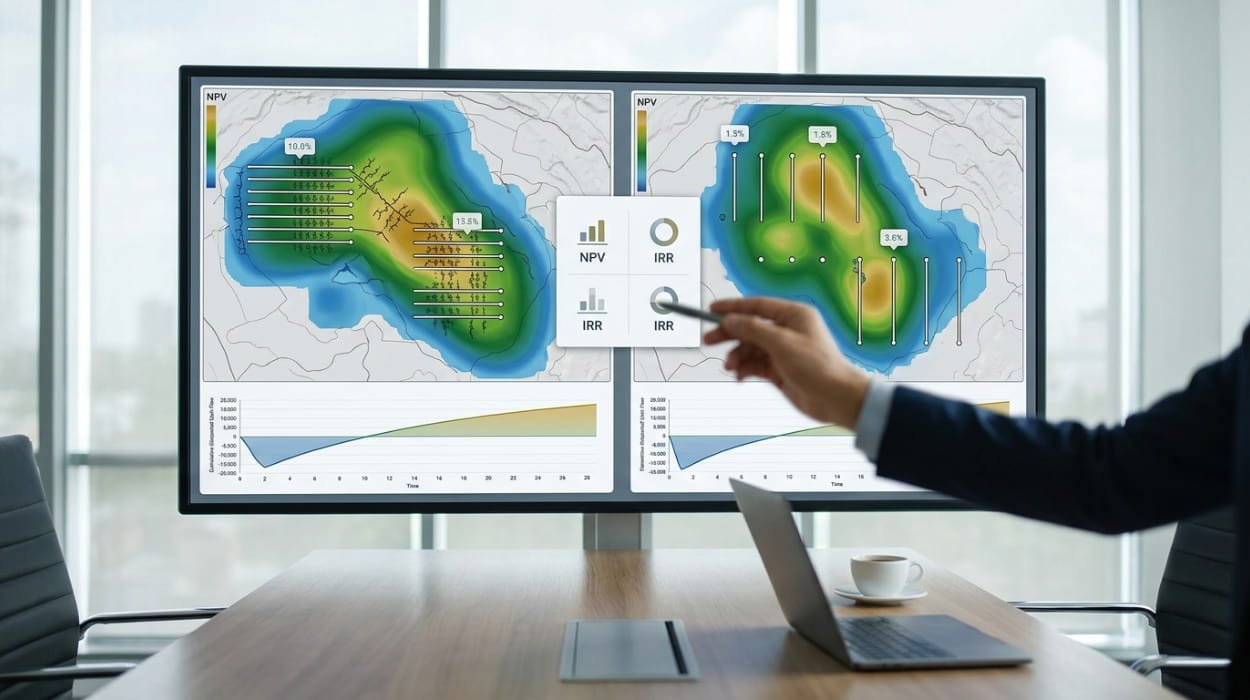
NPV and IRR Analysis for Comparing Alternative Oilfield Development Cases
Master net present value and internal rate of return methods to compare alternative oilfield development cases and optimize upstream capital allocation.
Read article →
How Petroleum Companies Assess the Commercial Viability of New Field Developments
Discover how petroleum companies train teams to assess field development commercial viability, optimize capital allocation, and drive project returns.
Read article →