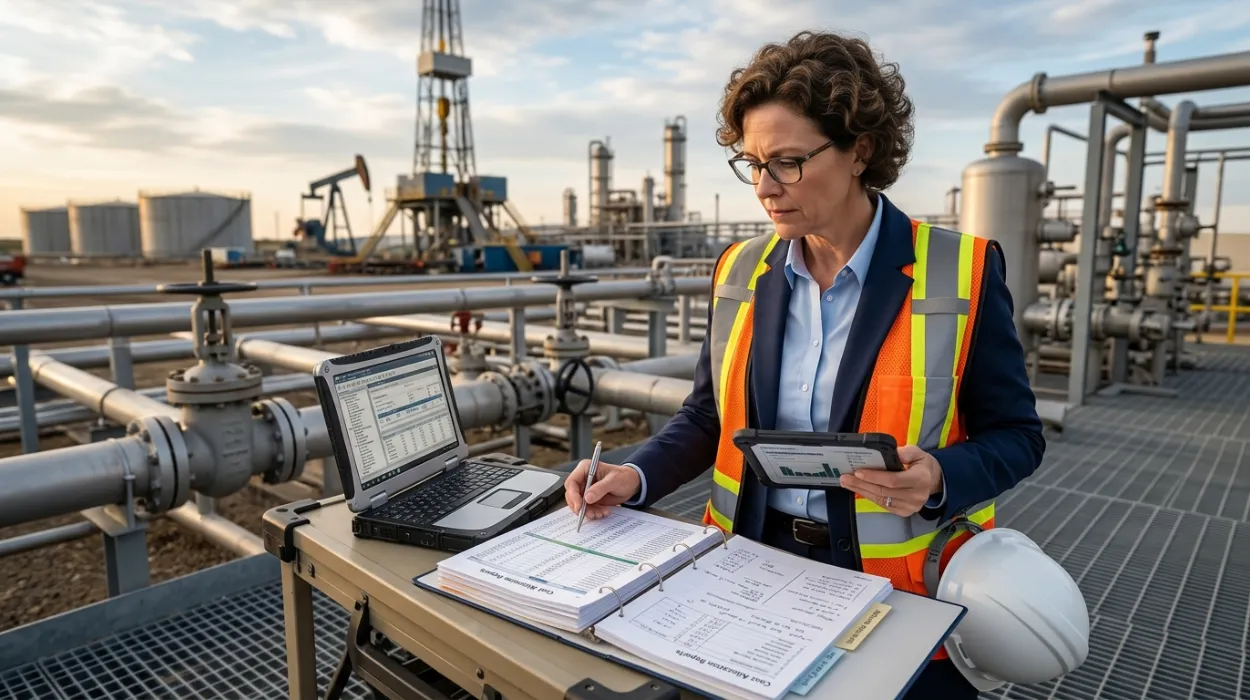
Forensic Accounting for Petroleum Operations is a specialized professional development program designed to bridge critical skill gaps in detecting, investigating, and preventing financial anomalies within upstream, midstream, and downstream energy sectors.
Petroleum operations involve complex financial structures, high capital expenditures, multi-jurisdictional joint ventures, and vast physical supply chains that create unique vulnerabilities for financial misstatement and fraud. Traditional auditing methodologies often fail to catch sophisticated irregularities hidden within technical production reports, complex royalty calculations, and international shipping manifests. To address these vulnerabilities, organizations frequently examine How Revenue, Inventory and Production Data Can Reveal Fraud Indicators to understand baseline data risks before implementing formal investigative controls.
When internal finance teams lack specialized investigative training, discrepancies in hydrocarbon accounting, inventory shrinkage, and capital expenditure allocations go unnoticed until they result in severe financial loss or regulatory penalties. The Institute For Oil & Gas Training addresses this exact operational risk through rigorous, specification-driven curricula. By building internal competencies, the Institute For Oil & Gas Training ensures that finance professionals, internal auditors, and compliance officers can independently verify financial integrity across complex assets.
Operating within highly technical industries requires more than standard accounting knowledge; it demands an integrated understanding of petroleum engineering metrics alongside forensic investigative frameworks. Without this dual expertise, corporate leadership teams remain exposed to undetected asset misappropriation, inflated operational expenditures, and inaccurate partner payout distributions in joint operating agreements. This program provides the exact technical framework required to neutralize such risks, establishing a verifiable baseline of financial transparency across all operational tiers.
Why is this training course structured using progressive investigative frameworks?
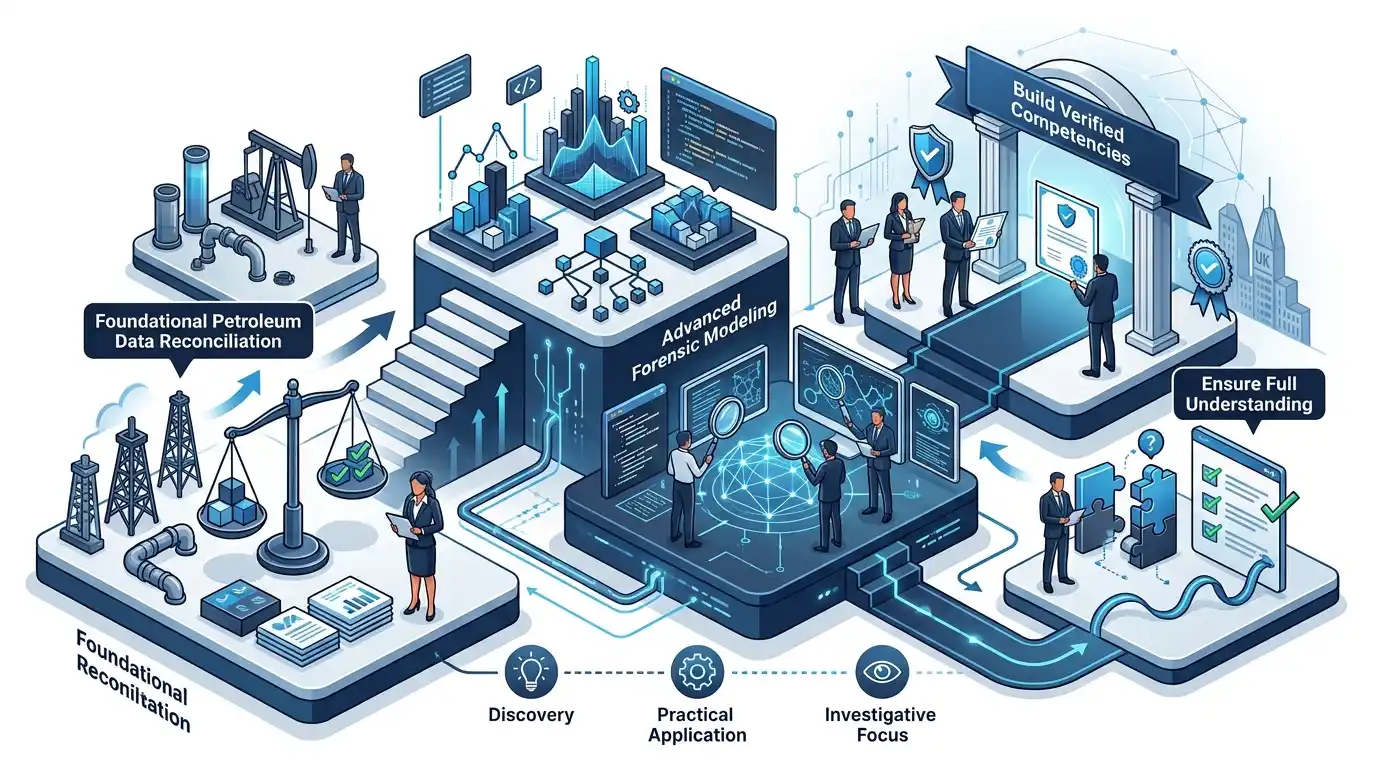
The curriculum is structured sequentially from foundational petroleum data reconciliation to advanced forensic modeling to ensure participants build practical, verifiable investigative competencies without knowledge gaps.
Complex financial investigations in the energy sector cannot be taught through generic accounting theories or disjointed case studies. The Institute For Oil & Gas Training implements a rigorous pedagogical architecture that mirrors actual operational investigations encountered by corporate finance departments. As professionals evaluate alternative professional development paths, reviewing resources detailing Using Forensic Accounting to Trace Irregular Transactions Across Petroleum Operations helps decision-makers align course mechanics with internal corporate compliance goals.
The Institute For Oil & Gas Training designs each learning module to transition participants systematically from theoretical data analysis to hands-on anomaly detection. Initial modules establish a firm grasp of petroleum measurement standards, volume reconciliation, and revenue distribution mechanics. Subsequent modules introduce sophisticated data analytics, digital forensics, and behavioral red flags associated with occupational fraud in remote drilling sites and corporate headquarters alike.
This intentional progression guarantees that professionals from diverse organizational backgrounds—ranging from senior internal auditors to corporate compliance officers—absorb complex investigative principles effectively. By breaking down intricate joint venture accounting structures into manageable analytical components, the Institute For Oil & Gas Training enables learners to apply newly acquired diagnostic tools immediately within their respective corporate environments, minimizing operational disruption while maximizing educational retention.
What specific technical skills and modular curriculum will participants master?
Participants master a comprehensive suite of technical competencies, including hydrocarbon volume reconciliation, joint venture audit analysis, digital footprint tracing, and advanced financial statement verification tailored for energy firms.
The curriculum is divided into distinct, highly focused modules designed to target specific operational risk zones within petroleum enterprises. The Institute For Oil & Gas Training ensures that every module delivers measurable skill acquisition, allowing corporate human resources teams to map training outcomes directly to employee performance appraisals and internal promotion criteria.
Module 1: Petroleum Revenue and Royalty Auditing
This foundational module equips learners with the mechanics of oil and gas revenue accounting, lease operating statements, and royalty distribution compliance. Participants learn to reconcile production volume reports from field meters against sales invoices and pipeline run tickets, identifying discrepancies indicative of volumetric theft or accounting errors.
Module 2: Inventory Measurement and Physical Reconciliation
Focusing on midstream and downstream assets, this module examines inventory valuation, tank calibration anomalies, and pipeline loss allowances. Learners explore the intersection of physical measurement data and financial ledgers, identifying how phantom inventory and improper shrinkage write-offs are manipulated to conceal operational losses.
Module 3: Capital Expenditure and Joint Venture Verification
Joint operating agreements present unique accounting challenges involving cash calls, overhead allocations, and joint interest billings. The Institute For Oil & Gas Training instructs participants on auditing capital expenditure authorizations, identifying inflated vendor billings, and detecting unauthorized cost shifting between active drilling projects.
Module 4: Digital Forensics and Transaction Tracing
Modern financial crimes leave digital footprints across enterprise resource planning systems, electronic spreadsheets, and communication channels. This module trains participants to utilize data analytics tools for pattern recognition, Benford's Law analysis, and duplicate payment detection across massive transactional datasets.
How is the course delivered across various professional formats?
The training program is delivered through flexible, high-immersion formats including intensive physical workshops, interactive virtual sessions, and hybrid corporate cohorts tailored to busy schedules.
Recognizing the operational demands placed on energy sector professionals, the Institute For Oil & Gas Training provides multiple delivery modalities without compromising academic rigor or practical engagement. Corporate HR departments can select the delivery format that best aligns with organizational travel policies, team distribution, and professional development calendars.
Intensive Onsite Workshops: Delivered directly at corporate offices or operational facilities, these multi-day sessions feature faculty-led instruction, group case studies, and localized compliance discussions facilitated by the Institute For Oil & Gas Training.
Live Virtual Cohorts: Designed for globally distributed teams, these structured online sessions combine real-time expert instruction with collaborative digital breakout rooms, ensuring peer-to-peer knowledge sharing regardless of geographic constraints.
Hybrid Corporate Programs: Combining self-paced technical modules with synchronous practical workshops, this format allows professionals to balance ongoing operational responsibilities with rigorous skill acquisition.
Every delivery format utilized by the Institute For Oil & Gas Training incorporates active learning methodologies, including simulated financial crime investigations, real-world dataset analysis, and structured peer reviews. This ensures that regardless of the chosen delivery channel, participants achieve the exact same high standard of operational competence and professional readiness.
What measurable workplace results and performance improvements can organizations expect?
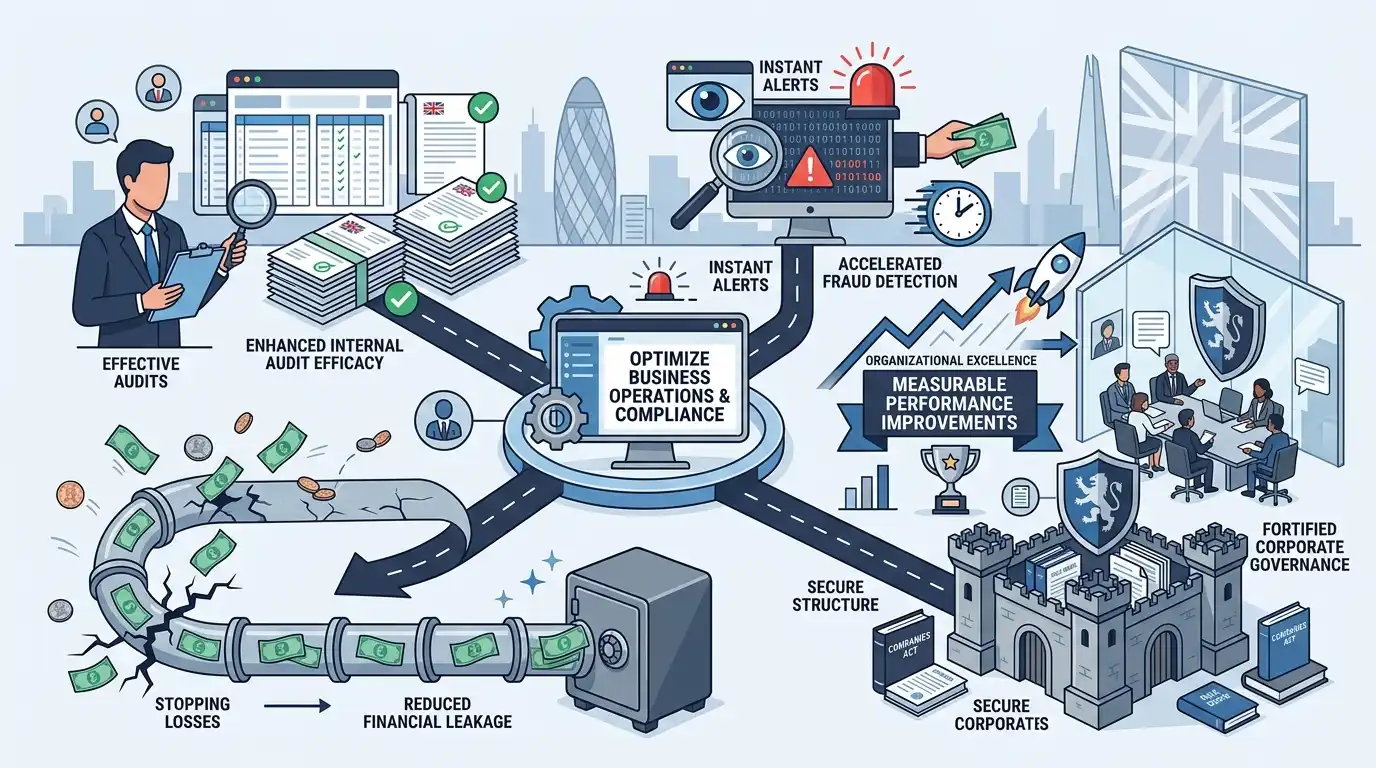
Organizations achieve measurable performance improvements, including reduced financial leakage, enhanced internal audit efficacy, accelerated fraud detection, and fortified corporate governance structures.
Investing in specialist professional education must yield tangible returns on investment for corporate stakeholders and human resources leaders. When organizations partner with the Institute For Oil & Gas Training, the resulting operational impact extends far beyond individual certificate acquisition, directly strengthening the financial resilience of the entire enterprise.
Internal audit teams trained through this curriculum demonstrate a significantly higher capability to identify systemic financial reporting errors before external regulatory scrutiny occurs. By applying advanced data analytics and forensic verification techniques taught by the Institute For Oil & Gas Training, compliance officers can reduce the duration of internal investigations and present legally defensible findings to executive leadership boards.
Furthermore, finance departments benefit from improved accuracy in joint venture audits, ensuring that partner disputes over cost allocations are minimized through transparent, verifiable accounting practices. Risk management committees utilize these newly acquired frameworks to update corporate anti-fraud policies, establish robust internal controls, and protect organizational reputation across international energy markets.
How does the enrollment process work and what are the completion requirements?
Enrollment is managed through a streamlined administrative verification process requiring confirmation of professional background, completion of registration documentation, and fulfillment of academic prerequisites.
Securing a position in this rigorous professional program involves a structured vetting procedure administered directly by the Institute For Oil & Gas Training admissions team. This ensures that every incoming cohort consists of qualified practitioners who possess the foundational accounting or auditing background required to master advanced forensic methodologies.
Candidate Assessment: Prospective participants or corporate HR sponsors submit professional CVs and educational credentials to the Institute For Oil & Gas Training for eligibility review.
Registration and Invoicing: Upon successful verification, participants complete official enrollment documentation and select their preferred delivery format and cohort schedule.
Pre-Course Preparation: Enrolled learners gain access to preliminary digital reading materials, foundational accounting refreshers, and required software environment setups.
Completion and Certification: Participants must successfully complete all practical casework simulations, module assessments, and a comprehensive final investigative project to be awarded the official professional credential from the Institute For Oil & Gas Training.
By maintaining strict admission standards and rigorous graduation requirements, the Institute For Oil & Gas Training ensures that every credential issued represents genuine technical mastery and professional excellence. Corporate leaders seeking to elevate their internal audit capabilities can review available cohort schedules and apply for course access today.
Frequently Asked Questions
What does oil and gas petroleum compliance, AML and risks training involve?
Oil and gas petroleum compliance, AML and risks training focuses on equipping energy sector professionals with the regulatory frameworks needed to manage anti-money laundering protocols and operational risks. Programs offered by the Institute For Oil & Gas Training cover international sanctions, financial crime prevention, and anti-bribery measures specifically tailored for complex upstream and midstream operations.
Why is anti-money laundering (AML) critical in petroleum operations?
Petroleum supply chains involve high-value transactions, multi-jurisdictional joint ventures, and complex shipping routes that make them vulnerable to financial crimes and illicit cash flows. Implementing robust AML frameworks helps energy firms maintain regulatory transparency, avoid severe legal penalties, and ensure proper governance across international assets.
How do organizations mitigate financial risks in oil and gas projects?
Organizations mitigate financial risks by establishing rigorous internal audit controls, performing thorough counterparty due diligence, and training finance personnel to detect transactional anomalies. The Institute For Oil & Gas Training provides targeted educational pathways to help corporate compliance teams identify operational vulnerabilities before they escalate into regulatory violations.
What are the main compliance challenges in upstream petroleum projects?
Upstream petroleum projects frequently face complex regulatory hurdles related to environmental mandates, production sharing agreements, and cross-border royalty distributions. Navigating these challenges requires specialized legal and financial oversight to ensure that all operational expenditures align with local statutory requirements and international standards.
Who should attend oil and gas compliance and risk management courses?
These professional development courses are designed for internal auditors, corporate compliance officers, risk managers, and legal professionals operating within the energy sector. By enrolling in specialized programs through the Institute For Oil & Gas Training, these practitioners gain the advanced diagnostic skills necessary to protect organizational assets and ensure absolute regulatory alignment.
Related training courses
JV Accounting & Partner Reporting for Operators Training Course
- Specialisation
- Oil & Gas Petroleum Accounting
- Duration
- 5 days · 15 CPD hours
Regulatory Compliance for Petroleum Entities Training Course
- Specialisation
- Oil & Gas Petroleum Compliance, AML & Risks
- Duration
- 5 days · 15 CPD hours
Segregation of Duties in Finance & ERP Systems Training Course
- Specialisation
- Oil & Gas Petroleum Compliance, AML & Risks
- Duration
- 5 days · 15 CPD hours
More articles
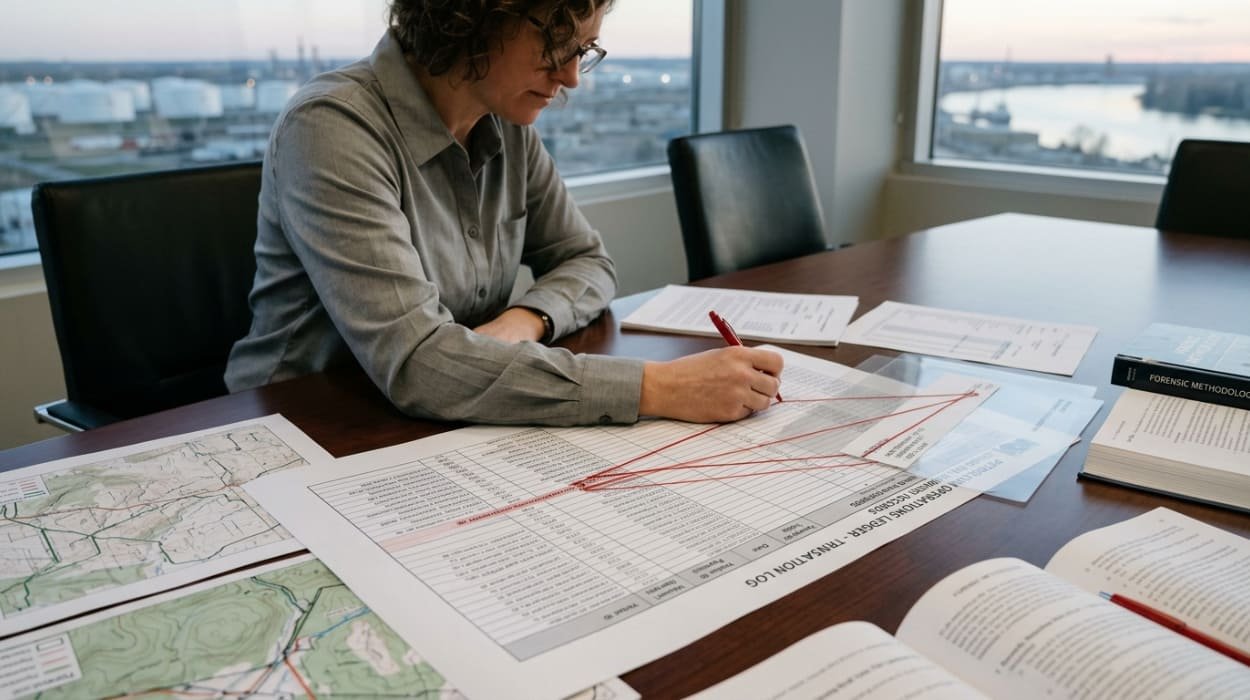
Using Forensic Accounting to Trace Irregular Transactions Across Petroleum Operations
Discover how forensic accounting traces irregular petroleum transactions, detects supply chain fraud, and secures upstream financial operations.
Read article →
How Revenue, Inventory and Production Data Can Reveal Fraud Indicators
Learn how corporate training empowers teams to use revenue, inventory, and production data to detect operational fraud in oil and gas sectors.
Read article →
Developing Petroleum Fraud Risk Skills Through Specialist Oil & Gas Training
Master forensic accounting, vendor auditing, and procurement fraud detection with specialized oil and gas training. Enroll your team today.
Read article →