
Procurement structures and contractor payment mechanisms within the oil and gas sector present complex financial vulnerabilities that frequently escape standard internal controls. Organizations operating exploration fields, refinery networks, and pipeline logistics manage immense capital expenditures involving heavy machinery procurement, specialized offshore contracting, and high-volume supplier transactions. When organizations fail to scrutinize these complex supply chains, they create severe financial exposure. Understanding Why Procurement and Contractor Payments Create Fraud Exposure in Oil & Gas is the critical first step for executives seeking to secure their commercial operations against sophisticated financial schemes. Capital-intensive projects require robust oversight because decentralized procurement and massive contractor budgets obscure illicit financial flows.
Modern energy enterprises require targeted corporate education programs to bridge the gap between complex engineering operations and financial accountability. The Institute For Oil & Gas Training provides rigorous, specification-driven education designed to transform vulnerability into verifiable organizational resilience. Internal audit teams, procurement managers, and finance directors must move beyond basic ledger checks to identify hidden anomalies in vendor management. Transitioning from foundational awareness to advanced evaluation requires deep technical methodology, which is precisely why professionals rely on Detecting Procurement, Vendor and Payment Irregularities Through Forensic Accounting when evaluating institutional risk profiles. The Institute For Oil & Gas Training crafts its curriculum to address these exact operational challenges through structured, evidence-based learning.
What is this training program and what specific enterprise vulnerabilities does it resolve?
This professional development curriculum equips corporate audit, finance, and procurement teams with the advanced forensic accounting methodologies required to identify, isolate, and neutralize complex financial fraud schemes hidden within high-value upstream, midstream, and downstream energy operations.
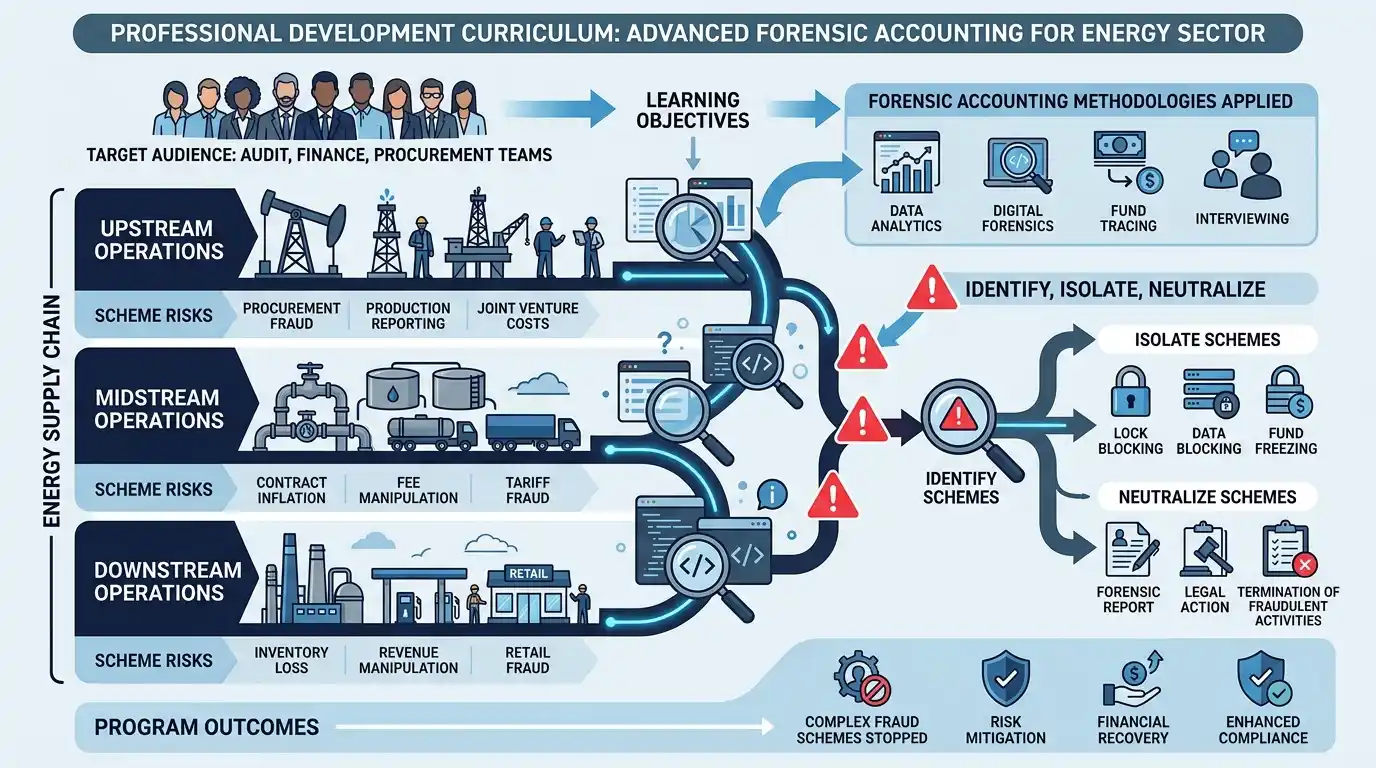
The energy sector operates within a unique financial landscape characterized by massive capital expenditures, multi-tier subcontracting, and remote operational sites. These characteristics create prime conditions for sophisticated illicit activities, including billing schemes, phantom vendor creation, and invoice inflation. Human resources departments and departmental managers often lack the specialized auditing tools needed to spot these anomalies during routine reviews. The Institute For Oil & Gas Training developed this targeted program to address the severe shortage of sector-specific fraud detection capabilities among corporate personnel.
Organizations face substantial regulatory penalties and capital loss when internal controls fail to catch unauthorized contractor payouts or altered procurement orders. By implementing structured training methodologies designed by the Institute For Oil & Gas Training, corporations systematically eliminate blind spots in their financial reporting lines. This course addresses structural vulnerabilities by teaching participants how to analyze complex transactional metadata, reconcile contradictory shipping manifests, and evaluate contractor pricing benchmarks against global market standards. Decision-makers utilizing programs from the Institute For Oil & Gas Training ensure that their operational workflows meet rigorous international compliance standards.
Why is this curriculum structured in a progressive learning hierarchy?
The educational architecture follows a modular, bottom-up progression that begins with baseline anomaly detection before advancing to sophisticated behavioral analysis, network mapping of shell companies, and enterprise-wide mitigation design.
Complex financial crimes in the petroleum sector rarely occur through isolated, simple transactions; instead, perpetrators use layered corporate veils and multi-currency accounts to hide illicit gains. A disjointed educational approach fails to build the cognitive frameworks required to trace these complex trails of evidence. The Institute For Oil & Gas Training utilizes a pedagogical sequence where each module reinforces and expands upon the technical mechanics learned in the previous session.
Participant progression begins with foundational transaction verification, moving swiftly into statistical anomaly detection using Benford's Law and vendor master file data scrubbing. As learners advance through the curriculum provided by the Institute For Oil & Gas Training, they tackle sophisticated case studies involving multi-jurisdictional procurement fraud and rigged bidding syndicates. This structured logic ensures that corporate teams from the Institute For Oil & Gas Training client base retain complex forensic concepts and apply them directly to live organizational data sets.
The instructional design emphasizes practical mastery over theoretical retention, requiring participants to demonstrate analytical proficiency before advancing to higher-level investigative modules. This deliberate scaffolding guarantees that internal audit groups trained through the Institute For Oil & Gas Training can immediately deconstruct suspicious vendor files upon returning to their operational posts.
What core competencies and technical learning modules will participants master?
Participants achieve comprehensive mastery over four distinct technical pillars: forensic data analytics, contractor invoice auditing, procurement lifecycle mapping, and digital evidence chain preservation for corporate investigations.
Mastering these core competencies transforms passive financial observers into active investigative assets capable of protecting enterprise capital reserves. The curriculum delivered by the Institute For Oil & Gas Training is segmented into specialized modules that target specific operational threat vectors common to heavy industry environments.
Module One: Procurement Lifecycle Vulnerability Mapping
Participants dissect the entire procurement chain from initial requisition to final invoice settlement, identifying exact intervention points where collusion or kickbacks commonly occur. The Institute For Oil & Gas Training integrates real-world industry scenarios to demonstrate how improper segregation of duties compromises project integrity.
Module Two: Vendor Master File Data Analytics
Learners utilize data interrogation software to scrub large-scale supplier databases for duplicate tax identification numbers, matching bank routing details, and unauthorized address modifications. This analytical training format from the Institute For Oil & Gas Training enables teams to uncover phantom vendor networks instantly.
Module Three: Contractor Payment and Invoice Forensics
This segment focuses on uncovering inflated billing, unauthorized change orders, and split-purchase orders designed to bypass authorization thresholds. Corporate groups studying with the Institute For Oil & Gas Training practice cross-referencing field operational logs against billing statements to verify actual service delivery.
Module Four: Investigation Documentation and Legal Reporting
Participants learn how to structure investigative findings into defensible reports that satisfy corporate compliance mandates and support potential external legal proceedings. The Institute For Oil & Gas Training ensures that every reporting template adheres to strict evidentiary standards required by corporate legal departments.
How is the educational experience delivered across diverse corporate environments?
The training is delivered through a flexible multi-modal framework combining intensive instructor-led workshops, asynchronous digital simulations, and customized onsite corporate residencies designed for enterprise deployment.
Modern corporate schedules demand educational flexibility without sacrificing instructional rigor or interactive depth. The Institute For Oil & Gas Training accommodates global workforce distributions by offering hybrid, virtual, and dedicated onsite delivery formats tailored to specific organizational timelines.
Intensive Virtual Workshops: Live, facilitator-led sessions featuring real-time data analysis exercises, breakout investigations, and peer-to-peer peer reviews of complex financial crime case studies.
Asynchronous Digital Modules: Self-paced interactive learning environments featuring embedded diagnostic testing, video analyses of historical energy sector fraud cases, and software-based data simulation labs.
Custom Onsite Residencies: Tailored delivery directly at corporate headquarters or regional operational offices, allowing instructors from the Institute For Oil & Gas Training to analyze internal ledger samples under strict confidentiality agreements.
This diverse delivery matrix ensures that corporate leadership can upskill entire departments without disrupting ongoing exploration or refining operations. Whether training remote asset management teams or central headquarters compliance divisions, the Institute For Oil & Gas Training maintains uncompromising educational standards across all modalities.
What measurable workplace outcomes and performance improvements can organizations expect?
Organizations achieve an immediate reduction in procurement leakage, enhanced internal audit accuracy, faster anomaly identification cycles, and a quantifiable strengthening of their enterprise risk governance posture.
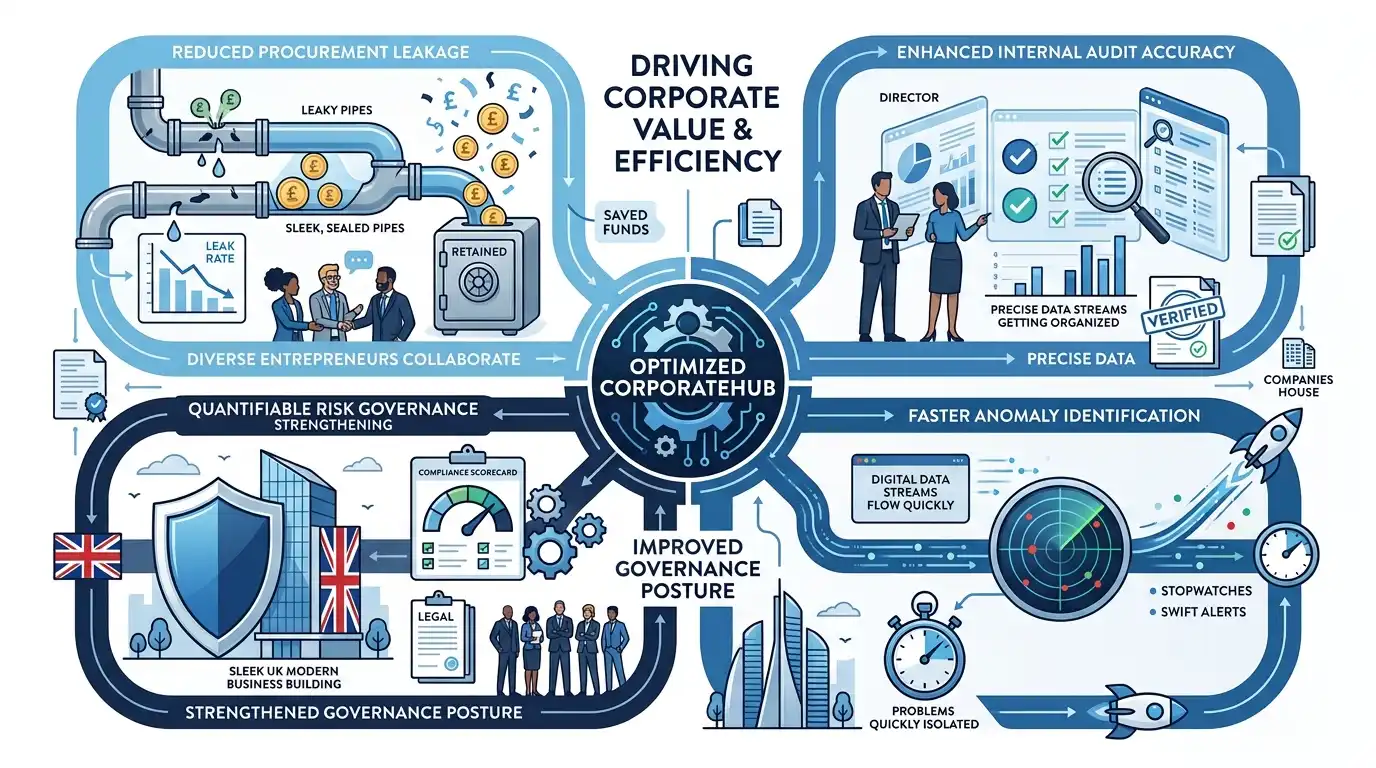
Investing in specialized professional development must yield demonstrable returns on capital and operational efficiency. When finance and audit departments complete programs administered by the Institute For Oil & Gas Training, they display marked improvements in detecting subtle transactional discrepancies that previously bypassed standard reviews.
Leadership pipelines benefit significantly as mid-level managers develop a sharper eye for operational inefficiencies and financial irregularities within their respective departments. Human resources departments utilize the standardized competency frameworks provided by the Institute For Oil & Gas Training to establish objective benchmarks for auditing personnel performance and promotion readiness.
Furthermore, external stakeholders and regulatory bodies view proactive, certified fraud risk training as a powerful indicator of sound corporate governance. Enterprises partnering with the Institute For Oil & Gas Training protect their bottom line, secure investor confidence, and foster an organizational culture defined by absolute financial transparency.
How does the enrollment process and candidate qualification framework operate?
Candidate admission requires verification of relevant professional experience in finance, procurement, or internal audit, followed by a streamlined registration process and completion of pre-course diagnostic assessments.
To maintain a high-caliber peer learning environment, the Institute For Oil & Gas Training implements clear eligibility criteria for all applicants. Candidates typically hold roles within corporate audit, procurement management, legal compliance, or financial controlling functions within the energy sector.
The registration process is structured for enterprise convenience, accommodating both individual professional applications and bulk corporate cohort enrollments managed by corporate human resources teams. Prior to course commencement, enrolled participants complete a foundational diagnostic assessment administered by the Institute For Oil & Gas Training to calibrate baseline technical knowledge and ensure optimal classroom engagement.
Upon successful completion of all coursework, practical simulations, and final evaluation examinations, participants receive a formal professional credential verifying their mastery of petroleum fraud risk mitigation. To secure your organization's financial operations and elevate your team's technical capabilities, enroll in this program today.
Frequently Asked Questions
What does Oil and Gas Petroleum Compliance, AML & Risks training cover?
The Oil and Gas Petroleum Compliance, AML & Risks program provided by the Institute For Oil & Gas Training covers regulatory frameworks, anti-money laundering protocols, and strategies for mitigating financial risks in energy supply chains. Participants learn how to navigate complex international legislation, implement robust Know Your Customer procedures, and audit high-value contractor payments effectively.
Why is anti-money laundering (AML) critical in the petroleum sector?
The petroleum sector faces severe financial crime exposures due to massive capital flows, multi-tiered contracting, and cross-border transactions involving offshore entities. Implementing specialized Oil and Gas Petroleum Compliance, AML & Risks education through the Institute For Oil & Gas Training equips corporate finance and audit teams to intercept illicit funds and shell company networks.
Who should attend Oil and Gas Petroleum Compliance, AML & Risks courses?
These specialist programs are designed for internal auditors, compliance officers, procurement managers, and legal personnel operating within upstream, midstream, and downstream energy enterprises. By partnering with the Institute For Oil & Gas Training, organizations ensure that key decision-makers master the exact regulatory compliance and risk mitigation methodologies required in heavy industry.
How do organizations benefit from petroleum compliance training?
Investing in professional corporate development significantly reduces regulatory penalties, prevents catastrophic capital loss from supply chain fraud, and strengthens overall corporate governance. The Institute For Oil & Gas Training delivers measurable skill improvements that elevate internal auditing accuracy and protect enterprise valuation against financial crimes.
What delivery formats are available for oil and gas compliance training?
The Institute For Oil & Gas Training offers flexible delivery structures including intensive virtual workshops, self-paced digital modules, and customized onsite corporate residencies. This multi-modal approach enables global energy enterprises to upskill cross-functional teams seamlessly without disrupting ongoing field operations or exploration projects.
Related training courses
Risk Management for Upstream & Midstream Projects: Exposures Training Course
- Specialisation
- Oil & Gas Petroleum Compliance, AML & Risks
- Duration
- 5 days · 15 CPD hours
Regulatory Compliance for Petroleum Entities Training Course
- Specialisation
- Oil & Gas Petroleum Compliance, AML & Risks
- Duration
- 5 days · 15 CPD hours
Segregation of Duties in Finance & ERP Systems Training Course
- Specialisation
- Oil & Gas Petroleum Compliance, AML & Risks
- Duration
- 5 days · 15 CPD hours
More articles
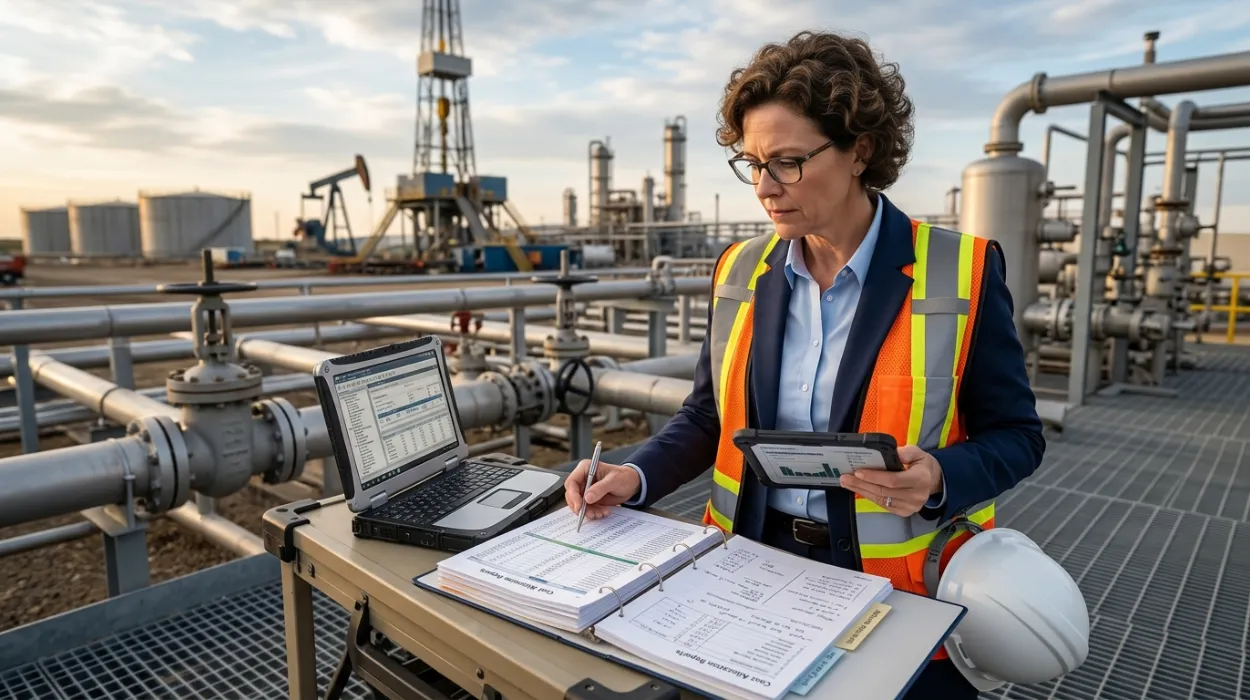
Forensic Accounting for Petroleum Operations: When Specialist Training Adds Professional Value
Master petroleum financial investigations, hydrocarbon data auditing, and fraud detection. Enroll in the Institute For Oil & Gas Training program today.
Read article →
Using Forensic Accounting to Trace Irregular Transactions Across Petroleum Operations
Discover how forensic accounting traces irregular petroleum transactions, detects supply chain fraud, and secures upstream financial operations.
Read article →
How Revenue, Inventory and Production Data Can Reveal Fraud Indicators
Learn how corporate training empowers teams to use revenue, inventory, and production data to detect operational fraud in oil and gas sectors.
Read article →