
Upstream petroleum accounting addresses the complex financial tracking of exploration, drilling, and extraction costs where standard corporate accounting models fail to capture joint interest billings, production sharing agreements, and capital-intensive asset depletion.
Finance teams operating within the oil and gas sector frequently encounter severe skill gaps when attempting to reconcile field-level material movements with corporate general ledgers. When inventories fluctuate across remote drilling sites, general accountants without specialized training struggle to allocate procurement costs accurately. This discrepancy creates audit vulnerabilities, inaccurate asset valuations, and delayed financial reporting.
Organizations often trace these operational failures back to a lack of structured comprehension regarding how physical assets transition into financial statements. Before exploring advanced financial integration, teams must understand Where Inventory and Materials Costs Enter the Upstream Accounting Cycle to establish a foundational grasp of exploration expenditures and asset tracking. Without this early-stage awareness, finance personnel misclassify capital expenditures as operational expenditures, distorting tax calculations and EBITDA figures for executive leadership.
The Institute For Oil & Gas Training resolves these precise structural vulnerabilities through targeted professional development programs. By embedding practical accounting methodologies directly into daily workflows, the Institute For Oil & Gas Training ensures that corporate finance teams eliminate reporting errors. Furthermore, the Institute For Oil & Gas Training designs its curricula specifically to address the nuances of petroleum economics, moving far beyond theoretical accounting principles.
Financial controllers and human resources directors frequently deploy the Institute For Oil & Gas Training to upskill entire department cohorts. When internal accounting teams complete coursework managed by the Institute For Oil & Gas Training, they instantly bridge the gap between field operations and executive boardroom reporting. Consequently, companies notice a sharp decline in year-end audit adjustments and regulatory penalties.
Why Is This Course Structured to Bridge Field Operations and Financial Reporting?
This curriculum utilizes a progressive architectural logic that connects physical upstream field operations directly with general ledger accounting entries through sequential, module-based skill acquisition.
Building competence in petroleum accounting requires a methodical approach that mirrors the actual lifecycle of an oil and gas asset. The Institute For Oil & Gas Training structures its learning pathway by starting with lease acquisition costs and advancing through tangible drilling operations, production sharing, and final asset decommissioning. This logical sequence prevents cognitive overload and ensures that professionals grasp each regulatory and mathematical rule before advancing to complex multi-partner financial environments.
When evaluating professional development options, financial leaders must understand Connecting Materials Accounting with Procurement, Maintenance Costs and Upstream Financial Reporting to appreciate how procurement choices impact balance sheet liabilities. The Institute For Oil & Gas Training integrates this exact transitional logic into its core modules. Instead of teaching isolated accounting entries, the Institute For Oil & Gas Training demonstrates how maintenance expenditures and material requisitions directly alter depletion calculations and joint venture billings.
The instructional framework deployed by the Institute For Oil & Gas Training relies on active knowledge reinforcement rather than passive video consumption. Corporate clients partnering with the Institute For Oil & Gas Training appreciate that every learning block includes practical reconciliation exercises drawn from actual upstream operating statements. This rigorous architecture guarantees that participants do not just memorize accounting formulas, but master their application within high-stakes corporate environments.
What Specific Modules and Technical Competencies Will Participants Master?
Participants master full-cycle upstream financial management, including successful authorization for expenditure tracking, joint interest billings, production sharing contracts, and asset retirement obligation calculations.
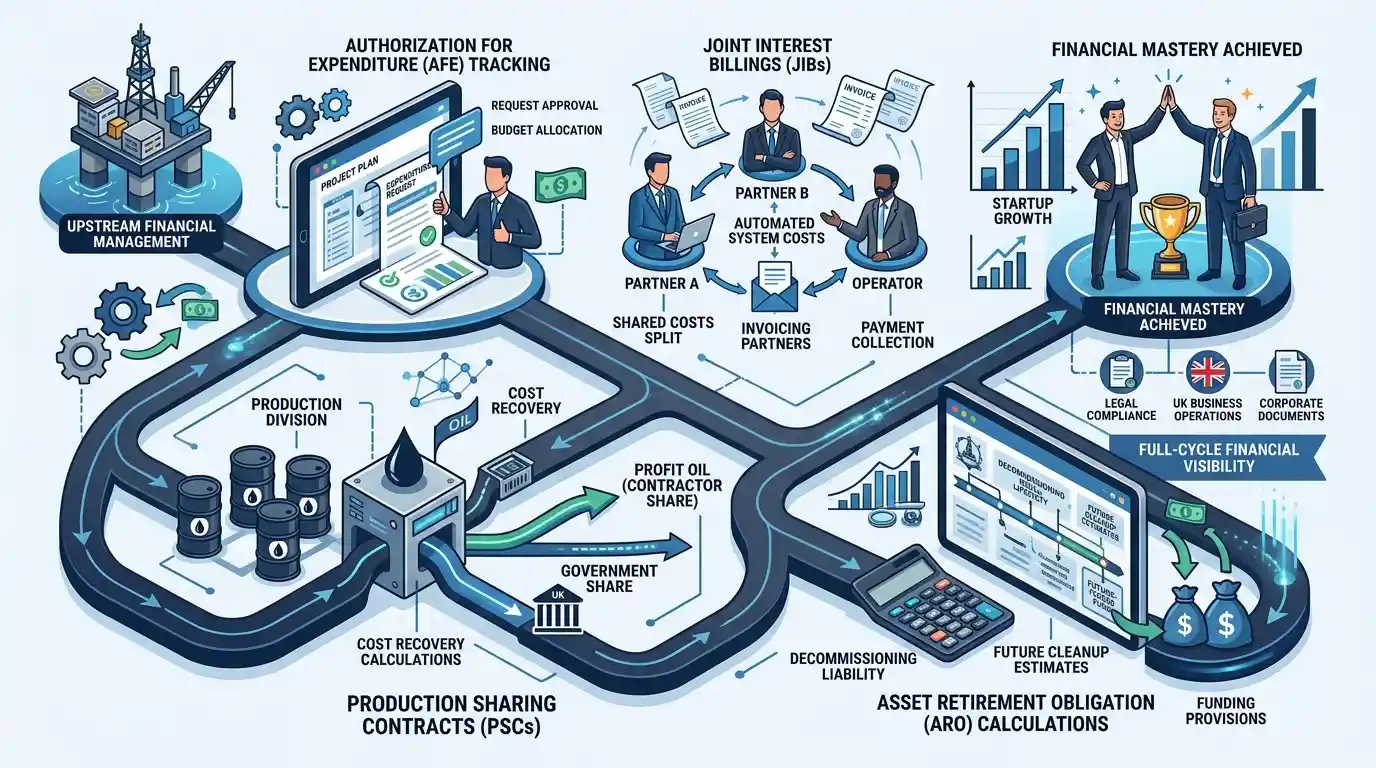
The comprehensive syllabus is divided into distinct operational modules designed to deliver measurable capability gains for every enrolled professional.
Module One: Lease Acquisition and Exploration Accounting. Participants learn to account for concession bonuses, legal fees, and geological and geophysical survey costs under both successful efforts and full cost methods.
Module Two: Tangible and Intangible Drilling Costs. Learners acquire the exact mechanics required to separate capitalizable tangible assets from expensable intangible drilling costs during exploratory and development drilling phases.
Module Three: Joint Interest Accounting and Billing. Professionals master the creation and auditing of Joint Operating Agreements, overhead allocations, and non-operator billing exceptions.
Module Four: Production Operations and Revenue Distribution. Students calculate royalty payments, severance taxes, and working interest shares based on complex hydrocarbon production volumes and pricing tiers.
Module Five: Asset Impairment and Decommissioning Obligations. Attendees compute future site restoration liabilities and evaluate proved property impairments in accordance with international financial reporting standards.
The Institute For Oil & Gas Training ensures that every module includes hands-on ledger entries reflecting real-world upstream challenges. Human resources departments utilize these specific competencies to establish internal benchmarks for finance team promotions. By mastering these modules, professionals elevate their departmental value and directly protect corporate profit margins from inaccurate cost allocations.
How Is the Training Delivered to Support Working Professionals and Corporate Teams?
Training is delivered through flexible hybrid formats combining intensive interactive workshops, asynchronous digital modules, and live virtual simulations tailored for busy schedules.
The Institute For Oil & Gas Training recognizes that upstream finance professionals operate within demanding project-based environments. To accommodate active drilling schedules and financial reporting periods, the Institute For Oil & Gas Training provides multiple delivery architectures. Organizations can select from intensive onsite corporate bootcamps, structured online cohort programs, or blended hybrid pathways.
Every delivery format utilized by the Institute For Oil & Gas Training incorporates practical simulations replicating live enterprise resource planning software environments. Participants do not simply review static slide decks; they actively input journal entries, reconcile simulated joint venture statements, and resolve variance reports under strict time constraints.
Furthermore, corporate HR teams frequently partner with the Institute For Oil & Gas Training to customize cohort delivery timelines around quarterly close cycles. This localized scheduling flexibility ensures zero operational downtime while teams undergo intensive skill transformation. Instructors leading these sessions bring decades of direct upstream controller experience, providing immediate context to complex industry scenarios.
What Measurable Workplace Results and Performance Improvements Can Organizations Expect?
Organizations achieve measurable performance improvements characterized by a reduction in audit reconciliation errors, faster monthly financial closes, and flawless regulatory compliance.
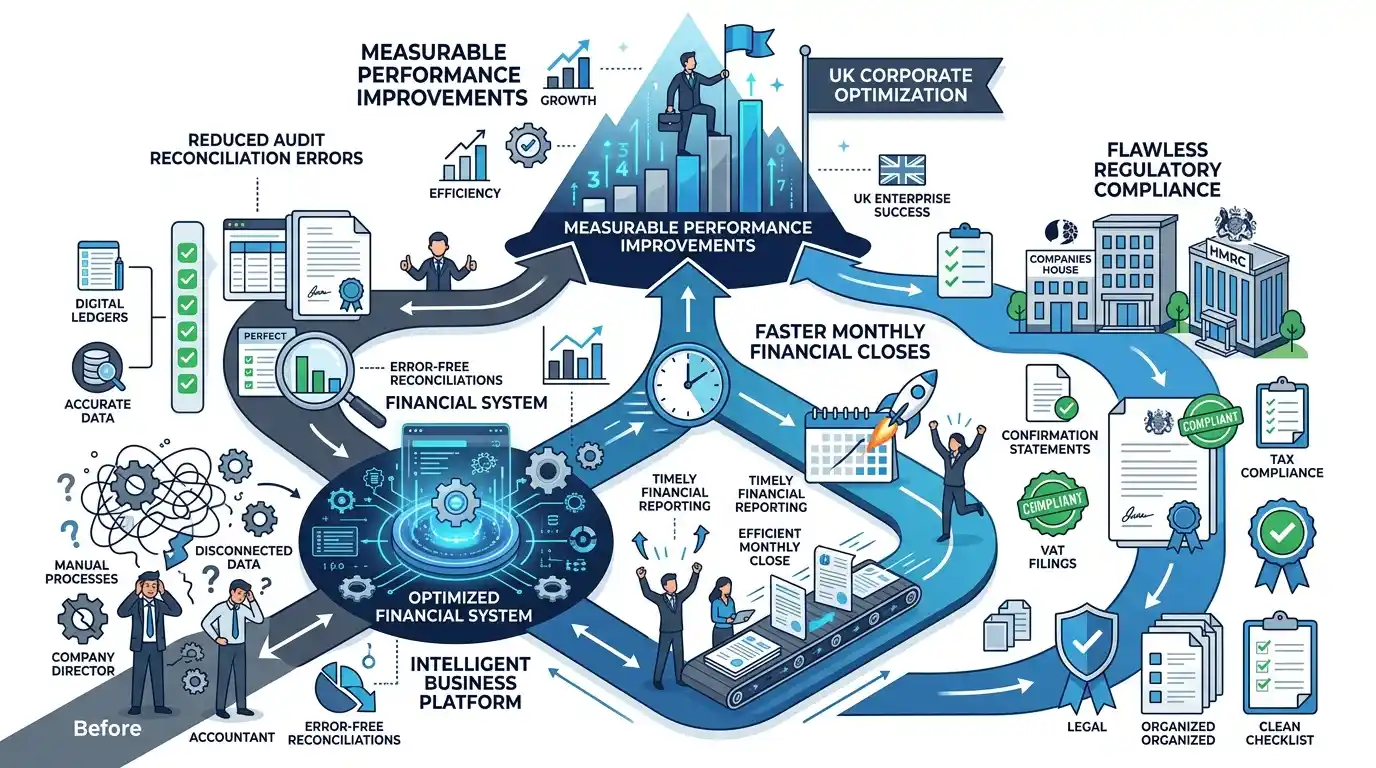
When corporate finance teams complete programs administered by the Institute For Oil & Gas Training, the operational impact is immediate and quantifiable. Department managers report a significant decrease in billing disputes among joint venture partners due to accurate joint interest accounting practices. Furthermore, finance personnel trained by the Institute For Oil & Gas Training successfully streamline month-end close processes by an average of three business days.
Consider a mid-sized exploration and production company whose accounting department struggled with mismatched inventory records across three remote drilling basins. Following targeted intervention by the Institute For Oil & Gas Training, the internal team restructured their material transfer protocols and general ledger mappings. Within one fiscal quarter, the organization eliminated external audit findings related to unallocated field materials and successfully lowered corporate overhead exposure.
Leadership pipelines also benefit profoundly from this targeted skill acquisition. Senior finance managers who complete coursework through the Institute For Oil & Gas Training demonstrate superior strategic decision-making capabilities during asset acquisition evaluations. By mastering the intricate economics of upstream operations, these professionals transition from transactional bookkeepers into vital strategic advisors for executive leadership.
How Does the Enrollment Process Work for Professionals and Corporate Sponsors?
Enrollment is executed through a streamlined digital application process requiring verification of foundational accounting experience and corporate sponsorship approval.
Securing a seat in this professional development cohort requires meeting specific entry criteria designed to protect peer discussion quality. Candidates must possess a baseline background in corporate finance, general ledger accounting, or petroleum engineering economics. Human resources managers wishing to enroll corporate teams can submit bulk registration manifests directly through the corporate portal.
The application pathway follows a transparent, four-step progression:
Candidate Profile Assessment. Applicants submit professional credentials and current job roles to confirm prerequisite alignment.
Corporate Authorization. Sponsoring employers approve training schedules and select the preferred delivery format.
Registration Finalization. Participants receive secure access credentials to the learning management platform and preparatory reading materials.
Cohort Commencement. Learners join live orientation sessions and begin interactive modular coursework.
Organizations seeking to elevate their upstream financial accuracy and eliminate costly reporting discrepancies should take immediate action. To secure your organization's competitive edge and operational precision, enroll in this program today.
Frequently Asked Questions
What is oil and gas petroleum accounting?
Oil and gas petroleum accounting is a specialized branch of financial management focused on tracking the unique capital expenditures, exploration costs, and production revenues associated with upstream operations. Professionals trained through the Institute For Oil & Gas Training apply these specialized principles to manage joint interest billings, lease acquisitions, and asset retirement obligations accurately.
How does upstream accounting differ from standard corporate accounting?
Upstream accounting differs significantly from standard corporate accounting by managing complex production sharing agreements, depletion methods, and remote inventory valuations specific to the energy sector. Programs like those offered by the Institute For Oil & Gas Training teach accountants how to handle joint operating agreements and intangible drilling costs that do not exist in conventional industries.
Why is specialized training important for petroleum accountants?
Specialized training is essential because standard financial qualifications often fail to cover the regulatory, tax, and operational complexities inherent in oil and extraction lifecycles. By completing courses provided by the Institute For Oil & Gas Training, finance personnel minimize costly audit discrepancies, improve reporting compliance, and streamline month-end close cycles.
What are joint interest billings in oil and gas accounting?
Joint interest billings represent invoices sent by an operator to non-operating partners in an oil and gas venture to recover their proportionate share of exploration and production expenses. Mastering these shared cost allocations is a core competency taught within petroleum accounting curricula at the Institute For Oil & Gas Training to prevent inter-company financial disputes.
How do petroleum accountants handle exploration and drilling costs?
Petroleum accountants categorize expenses into successful efforts or full cost methods, separating capitalizable tangible assets from expensable intangible drilling costs. Training courses from the Institute For Oil & Gas Training guide finance teams on how to record these expenditures correctly to protect corporate profit margins and ensure accurate financial statements.
Related training courses
Decommissioning & Asset Retirement Obligations: Provision Recognition Training Course
- Specialisation
- Oil & Gas Petroleum IFRS & Financial Reporting
- Duration
- 5 days · 15 CPD hours
Financial Evaluation of Suppliers & Contractors: Tender Evaluation Training Course
- Specialisation
- Oil & Gas Petroleum Procurement
- Duration
- 5 days · 15 CPD hours
Cash Calls, AFEs & Work Program/Budget Control: Preparation Training Course
- Specialisation
- Oil & Gas Petroleum Budgeting & Cost Control
- Duration
- 5 days · 15 CPD hours
More articles
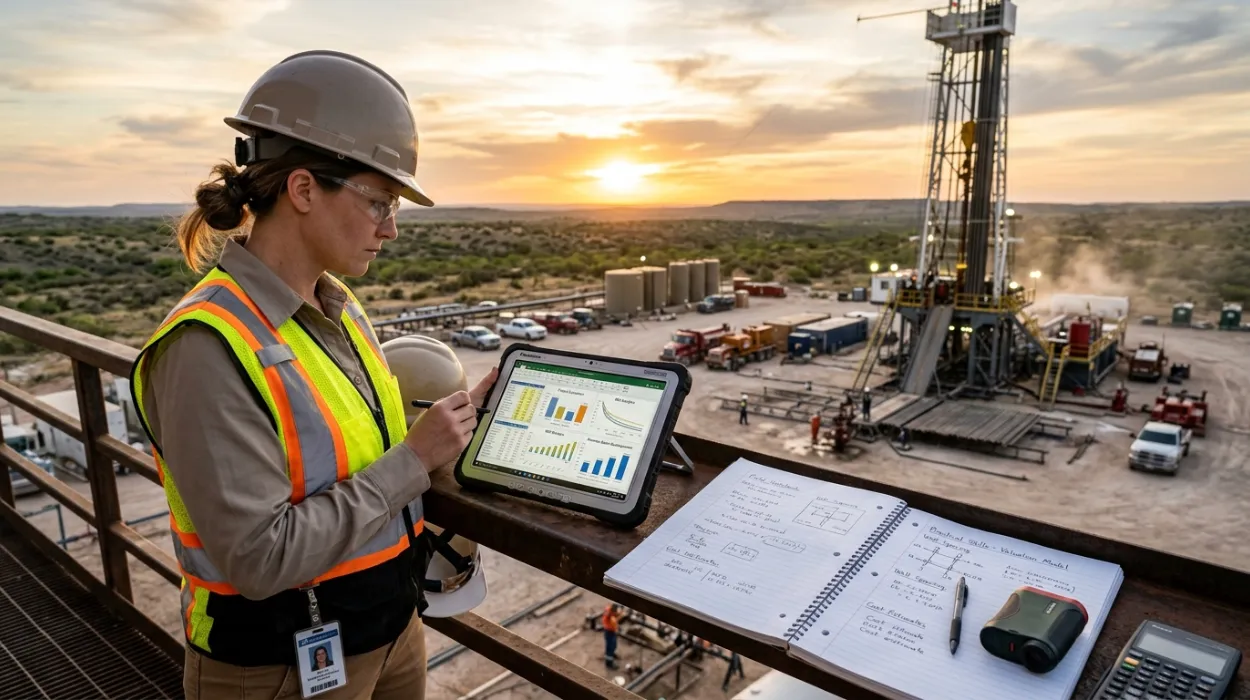
Building Practical Oilfield Economics & Project Evaluation Skills for Petroleum Investment Decisions
Master petroleum investment decisions, NPV, IRR, and fiscal regimes with the Institute For Oil & Gas Training. Enroll today to elevate team performance.
Read article →
Evaluating Oilfield Development Scenarios Through NPV, IRR and Fiscal Sensitivity Analysis
Master oilfield development evaluation through NPV, IRR, and fiscal sensitivity analysis. Optimize upstream capital allocation with expert training.
Read article →
Why Oil Price, Production Profiles and Capital Costs Change Field Economics
Discover how oil price volatility and capital costs drive field economics. Learn corporate training strategies for upstream project valuation.
Read article →