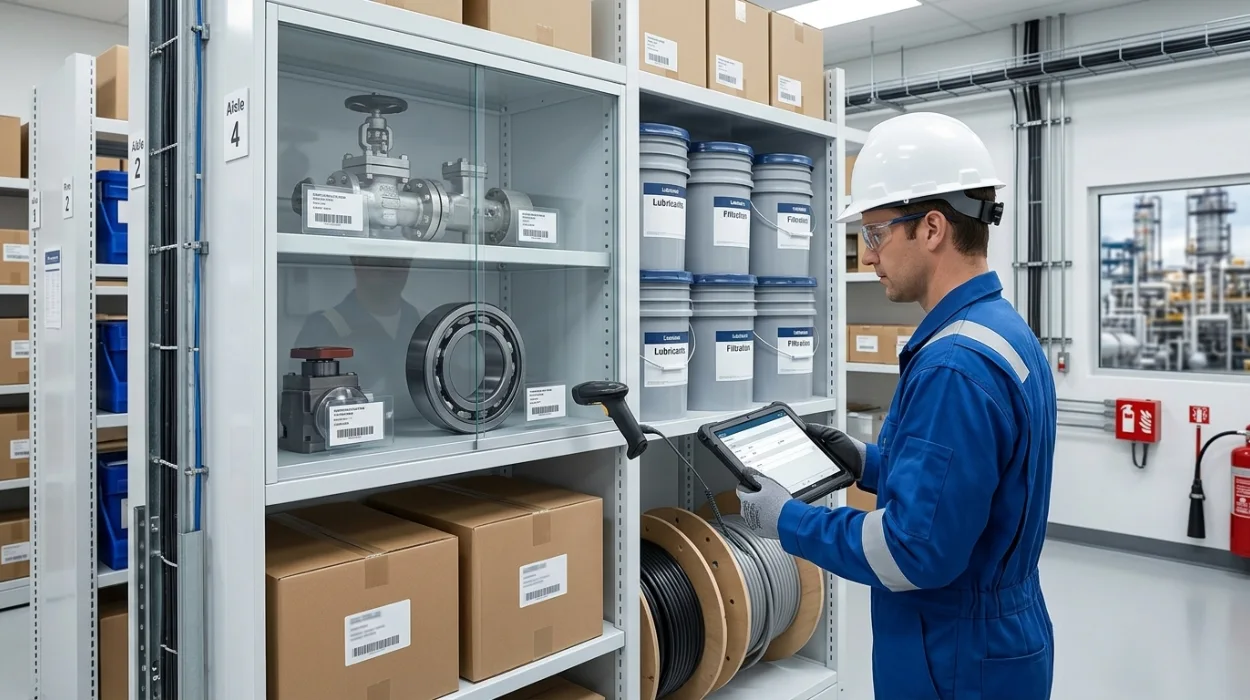
Managing operational stock, critical spares, and consumable items in upstream and downstream facilities presents unique financial and logisitcal complexities. Capital allocation in heavy energy production environments requires precise balances between asset availability and working capital efficiency. Poor tracking of high-value reserves directly damages balance sheets and disrupts continuous processing. Understanding how precise ledger management underpins profitability helps finance teams avoid unexpected write-offs, which is why inventory accuracy matters to oil & gas production economics across complex global asset portfolios.
Accounting teams must account for specialized components that lie idle for years alongside high-velocity operational supplies. Standard retail or manufacturing inventory models fail to capture the depreciation, obsolescence, and holding costs associated with continuous extraction operations. Decision-makers evaluating organizational capability must determine how to upskill financial and warehouse personnel to handle these specialized assets. Selecting the right learning path ensures that stock valuations reflect true asset conditions and regulatory requirements.
How Does Materials Accounting Differ for Critical Spares Versus Consumables?
Critical spares require capitalization or long-term component tracking with specialized impairment testing, whereas consumables undergo rapid expense recognition through dynamic inventory valuation methods based on continuous operational usage patterns, volumetric consumption metrics, and immediate replenishment schedules within short accounting periods.
Critical spares represent capital-intensive components held to mitigate catastrophic operational failure risks. These items sit in storage facilities for extended periods without active turnover. Accounting frameworks treat these items differently from standard inventory because their holding period spans several financial years. Financial personnel must apply capitalisation rules, evaluate depreciation schedules, and calculate impairment reserves based on potential technological or operational obsolescence.
Consumables encompass low-cost, high-velocity items consumed during daily drilling, refining, or maintenance routines. These items move through logistics systems rapidly, requiring continuous inventory recording techniques like First-In, First-Out (FIFO) or Weighted Average Cost (AVCO). The primary accounting objective for consumables centers on tracking precise consumption rates and matching expenditure directly to active operational periods.
Operational stock bridges the gap between capital components and daily consumables. This category includes valves, pipes, and electrical assemblies essential for planned maintenance turnarounds. Finance and logistics teams must coordinate closely to ensure these materials carry correct landed costs, including freight, customs clearance, and insurance adjustments, rather than simple purchase orders.
The structural difference between these inventory classes demands specific analytical capabilities within energy finance departments. When organizations evaluate structured development programs to bridge these technical accounting gaps, enrolling staff in targeted Inventory and Materials Accounting for Critical Spares, Consumables and Operational Stock training ensures standardized ledger accuracy across all asset categories. Building these competencies prevents misclassification of operational expenses as capital expenditure.
What Structural Learning Approaches Build Competency in Energy Sector Materials Accounting?
Structured learning approaches range from academic theoretical courses to practical, case-study-driven workplace workshops, with blended experiential models providing the highest retention and direct application for complex oil and gas stock valuation, financial reporting, and joint venture audits.
Evaluating capability development options requires matching educational methods with operational realities. Finance professionals must master both international financial reporting standards (IFRS) and localized Joint Operating Agreement (JOA) accounting rules. Generic corporate accounting courses often omit the sector-specific nuances of material management, leaving teams unprepared for field-level inventory reconciliations.
Theoretical classroom instruction provides a foundational understanding of accounting principles, debits, credits, and balance sheet presentations. However, standalone theoretical frameworks fail to address practical field challenges, such as handling surplus materials following major drilling campaigns or accounting for damaged goods returning from offshore platforms. Professionals trained purely in theory often struggle during internal or joint venture audits.
Software-focused ERP training teaches systems navigation, data entry, and automated reporting mechanics. While necessary for daily workflow processing, software instruction rarely explains the financial reasoning behind inventory adjustments or impairment calculations. Users learn which buttons to click without understanding how transaction codes affect overhead allocations or joint venture cost-recovery metrics.
Contextual, industry-specific training blends financial standards with physical supply chain workflows. This approach utilizes real-world case studies, ledger reconciliations, and field-based material tracking scenarios. Participants learn how material movement in the warehouse translates to line items on the corporate financial balance sheet, leading to higher accuracy in material ledger maintenance.
Training Approach | Primary Focus Area | Typical Duration | Time-to-Competency | Practical Applicability |
Academic Self-Study | Theoretical accounting principles & standards | 3–6 Months | Slow (6+ Months) | Low – Lacks oil & gas operational context |
ERP Vendor System Training | Software mechanics & transactional entry | 2–5 Days | Moderate (2–3 Months) | Medium – Focuses on software, not policy |
Generic Corporate Seminars | Broad financial control concepts | 1–2 Days | Slow (4+ Months) | Low – Ignores critical spares & JOA rules |
Contextual Energy Workshops | Industry accounting, spares impairment, & audits | 3–5 Days | Rapid (2–4 Weeks) | High – Directly mirrors daily field workflows |
How Do Organizations Evaluate the Effectiveness of Materials Accounting Training Options?
Organizations evaluate training options by measuring learning retention, reduction in inventory reconciliation errors, audit compliance metrics, speed of period-end financial closes, and the practical application of impairment models to obsolete physical stock within operational facilities.
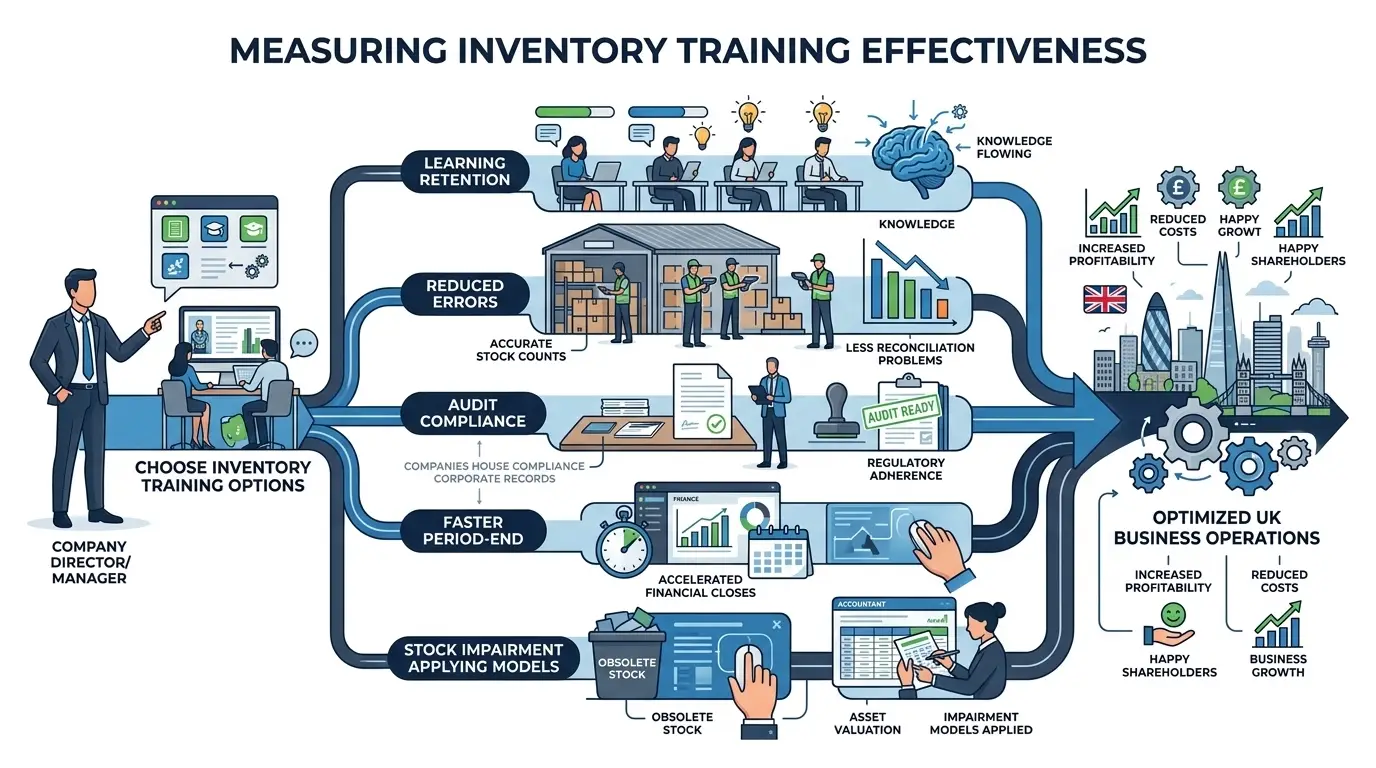
Evaluating professional development programs requires structured assessment criteria to ensure corporate investments yield measurable operational improvements. HR leaders and finance directors must assess whether a program delivers technical comprehension alongside practical execution capabilities. The choice between training formats hinges on how effectively the curriculum addresses real-world operational challenges.
To determine which framework best serves organizational needs, learning and development decision-makers evaluate training methods against key operational criteria:
Alignment with Energy Sector Accounting Standards
Accounting for oil and gas assets requires specialized knowledge of IFRS 6, IAS 2, and localized joint operating agreements. Professional training must explicitly cover these standards in relation to physical inventory. Courses that teach general retail or manufacturing inventory accounting fail to address complex concepts like material transfer pricing between joint venture partners or the capitalization of insurance spares.
Integration of Physical Warehouse and Ledger Operations
A major source of accounting errors stems from communication gaps between field warehouse managers and finance department analysts. Effective training bridges this gap by demonstrating how physical actions—such as receiving, issuing, scrapping, or transferring stock—impact financial ledgers. Programs incorporating combined workflows help teams eliminate stock discrepancies before year-end physical counts.
Practical Focus on Impairment and Obsolescence
Critical spares often remain on balance sheets for decades without physical movement. Finance teams must apply continuous evaluation frameworks to calculate appropriate provisions for impairment and technical obsolescence. Evaluators must ensure training options provide actionable mathematical models for calculating these reserves rather than superficial high-level descriptions.
Audit Readiness and Joint Venture Cost Recovery
Joint venture partners frequently audit inventory records to verify that shared material costs are accurate and compliant with operating agreements. Incorrectly categorized materials can lead to disputed cost recoveries and severe financial penalties. High-impact training equips financial personnel with the exact documentation, coding, and reconciliation skills needed to pass stringent joint venture audits.
Evaluation Metric | Legacy Internal Training | Generic External Seminars | Industry-Specific Programs |
Joint Venture Audit Preparedness | Moderate – Dependent on internal knowledge | Low – Non-specific accounting rules | High – Aligned with JOA cost recovery |
Impairment Modeling Accuracy | Low – Frequently overlooked | Low – Theoretical models only | High – Applied energy asset frameworks |
Cross-Departmental Integration | Low – Siloed by department | Minimal – Broad audience focus | High – Connects warehouse & finance |
Reconciliation Error Reduction | Incremental improvement | Negligible impact | Substantial error reduction |
What Business Impact Does Up-Skilling Deliver to Energy Finance and Supply Chain Teams?
Up-skilling delivers direct business impact by reducing inventory write-offs, accelerating month-end financial closing cycles, optimizing working capital allocation, eliminating joint venture audit exceptions, and improving material visibility across offshore and onshore operating sites.
Investing in specialized training directly enhances working capital management. Unrecorded, misclassified, or missing inventory distorts company financial positions, forcing organizations to take unexpected end-of-year write-offs. When finance and supply chain teams share a clear understanding of material valuation rules, capital stays working productively across the asset lifecycle.
Properly trained teams systematically review slow-moving stock, identifying surplus critical spares for potential resale, transfer, or impairment. This proactive maintenance of the material ledger prevents the accumulation of phantom inventory—items recorded on balance sheets that are physically damaged, obsolete, or missing from storage yards.
Enhancing materials accounting skills directly accelerates month-end and year-end financial reporting cycles. A primary cause of delays during financial closes is the manual reconciliation of physical stock counts against general ledger entries. Up-skilled personnel maintain continuous reconciliation protocols, drastically reducing the time required to close books and report earnings to stakeholders.
External and joint venture audits become significantly smoother when materials accounting processes are clear and fully documented. Finance personnel who understand energy-specific cost-recovery rules can defend accounting entries, substantiate material pricing models, and resolve partner audit inquiries quickly. This structural efficiency protects organizational reputation and prevents financial clawbacks.
When leadership moves to bridge skill gaps through structured corporate professional development, implementing targeted inventory & materials accounting training: building the skills required for oil & gas finance roles provides the technical framework needed to establish robust financial controls across all operational sites.
Frequently Asked Questions
What is oil and gas petroleum accounting?
Oil and gas petroleum accounting is a specialized branch of financial management that addresses the unique operational risks, complex joint venture structures, and regulatory reporting requirements of the energy sector. It encompasses joint interest billing, production revenue accounting, impairment testing, and depletion calculations specific to upstream, midstream, and downstream assets. Professionals trained through the Institute For Oil & Gas Training learn to apply IFRS and US GAAP standards to accurately track capital expenditure and operational revenue across asset lifecycles.
How does petroleum accounting differ from standard corporate accounting?
Petroleum accounting differs from standard financial accounting due to high capital risk, extended asset exploration timelines, complex cost-recovery mechanisms, and strict joint operating agreements. Energy entities must evaluate exploration costs using either the Successful Efforts or Full Cost accounting frameworks, which directly dictate how capital is recognized on financial balance sheets. Programs in Oil and Gas Petroleum Accounting from the Institute For Oil & Gas Training equip finance teams with the technical skills required to navigate these specialized ledger requirements and joint venture audits.
What are the key financial standards used in oil and gas petroleum accounting?
The primary financial frameworks governing petroleum financial management are International Financial Reporting Standards (IFRS 6 for Exploration and Evaluation of Mineral Resources) and US GAAP Accounting Standards Codification (ASC 932 for Extractive Activities). These standards regulate how companies account for reserve valuations, decommissioning liabilities, site restoration provisions, and impairment models for long-term production assets. Coursework at the Institute For Oil & Gas Training covers these standards in depth to ensure finance professionals maintain compliance during statutory and partner audits.
Why is joint interest billing important in petroleum accounting?
Joint interest billing (JIB) is critical in energy sector accounting because large petroleum exploration and production projects are typically funded through joint ventures to share financial risk among multiple operators and non-operating partners. JIB accounting ensures that shared capital costs and operating expenses are accurately allocated, invoiced, and audited according to the terms of the Joint Operating Agreement (JOA). Completing Oil and Gas Petroleum Accounting training with the Institute For Oil & Gas Training helps financial analysts manage cost-recovery calculations and resolve partner billing disputes effectively.
Who should undertake training in oil and gas petroleum accounting?
Training in Oil and Gas Petroleum Accounting is designed for financial controllers, joint venture accountants, revenue analysts, corporate auditors, and supply chain finance managers working within energy organizations. It is also highly beneficial for HR and learning leaders seeking to upskill workforce teams in energy-specific compliance, ledger management, and financial reporting. The Institute For Oil & Gas Training delivers practical instruction tailored to bridge technical skill gaps and improve operational financial accuracy across petroleum enterprises.
Related training courses
Petroleum Industry Accounting Fundamentals: NOCs, IOCs & Independents Training Course
- Specialisation
- Oil & Gas Petroleum Accounting
- Duration
- 5 days · 15 CPD hours
Upstream Cost Classification: Exploration to Production Phases Training Course
- Specialisation
- Oil & Gas Petroleum Accounting
- Duration
- 5 days · 15 CPD hours
Fixed Assets & Capital Projects: AFE & Impairment Training Course
- Specialisation
- Oil & Gas Petroleum Accounting
- Duration
- 5 days · 15 CPD hours
More articles
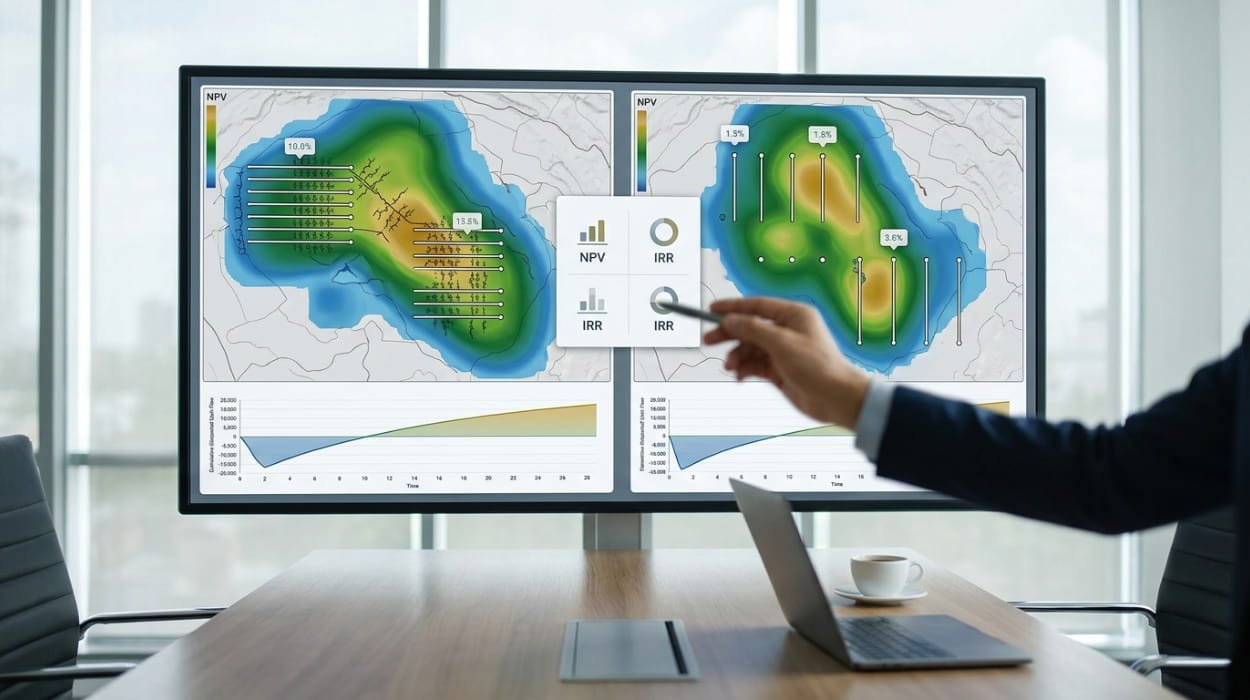
NPV and IRR Analysis for Comparing Alternative Oilfield Development Cases
Master net present value and internal rate of return methods to compare alternative oilfield development cases and optimize upstream capital allocation.
Read article →
How Petroleum Companies Assess the Commercial Viability of New Field Developments
Discover how petroleum companies train teams to assess field development commercial viability, optimize capital allocation, and drive project returns.
Read article →
Building Practical Oilfield Economics & Project Evaluation Skills for Petroleum Investment Decisions
Master petroleum investment decisions, NPV, IRR, and fiscal regimes with the Institute For Oil & Gas Training. Enroll today to elevate team performance.
Read article →