
Investigating financial irregularities within petroleum operations requires specialized forensic accounting methodologies that target joint venture accounts, production sharing contracts, and complex procurement chains. When organizations evaluate how vulnerabilities manifest across different asset classes, understanding operational risks becomes critical. Financial controllers often examine how vulnerabilities emerge across assets by studying Where Fraud Exposure Arises Across the Petroleum Operations Cycle, establishing baseline knowledge before deploying investigative frameworks. Petroleum assets involve multi-layered capital expenditures, complex supply chain logistics, and cross-border transactions that obscure unauthorized capital diversion.
Detecting financial anomalies in upstream and downstream projects demands rigorous data interrogation techniques that isolate irregularities from legitimate operational variances. Forensic accountants utilize data analytics, relational database queries, and ledger reconciliation to reconstruct transaction lifecycles. Traditional auditing verifies compliance and historical ledger entries, whereas forensic accounting establishes criminal intent, quantifies illicit gains, and traces assets through shell entities. This evaluative phase bridges baseline operational awareness and active programmatic remediation, allowing organizations to implement structured interventions such as Fraud Risks in Petroleum Operations Training: What Oil & Gas Professionals Can Gain to upskill multidisciplinary teams. Internal audit teams must evaluate whether internal control deficiencies stem from systemic process failures or deliberate circumvention by personnel.
How do forensic accountants detect revenue leakage in joint venture accounts?
Forensic accountants detect revenue leakage in joint venture accounts by cross-referencing operator billing statements with independent production logs, third-party sales manifests, and master service agreements to identify inflated cash calls and unauthorized cost allocations.
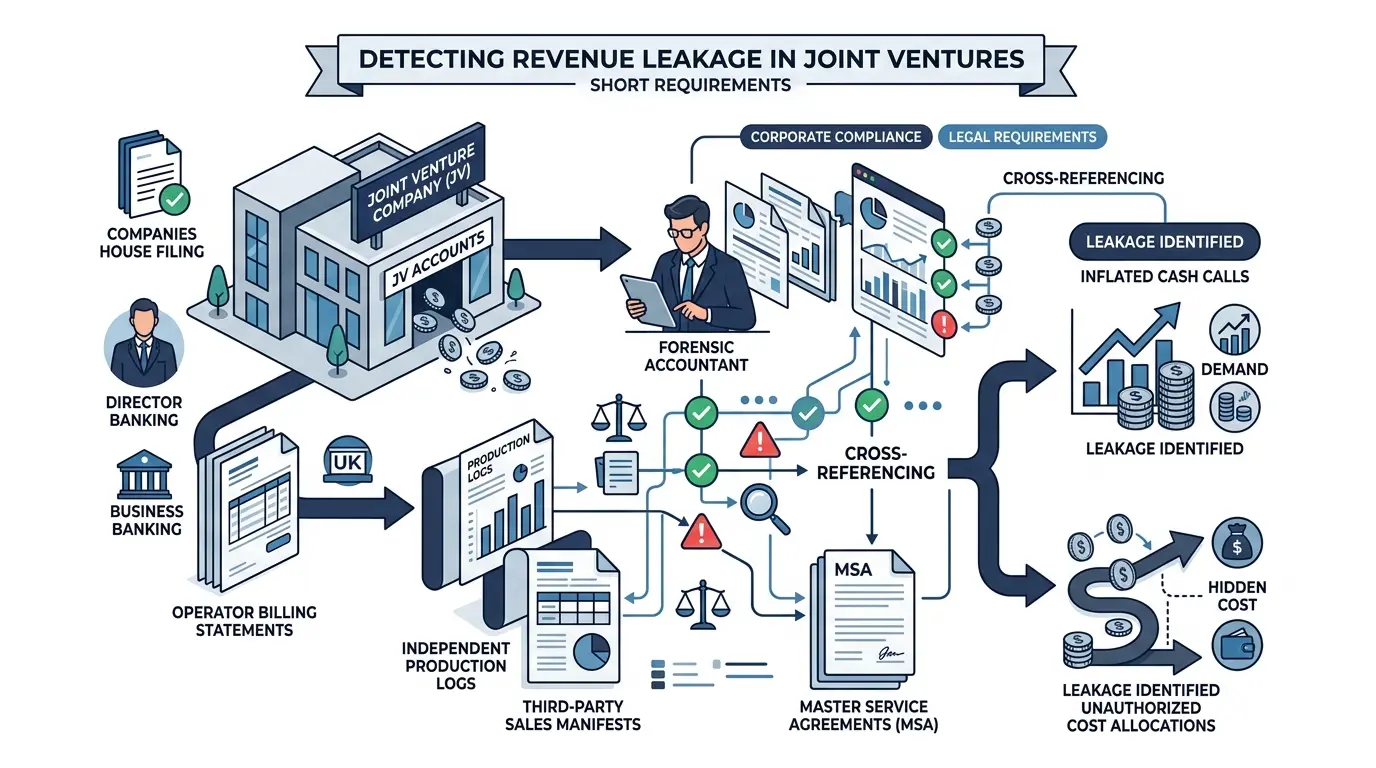
Joint venture accounting in the petroleum sector creates structural complexity because multiple non-operating partners fund capital and operational expenditures based on agreed equity percentages. Operators manage day-to-day expenditures, presenting significant risks for misallocation of general and administrative expenses, joint interest billing inflation, and unauthorized affiliate transactions. Forensic investigators deploy digital ledger analysis to examine thousands of line items within joint interest billings, flagging duplicate vendor payments, unapproved change orders, and inflated equipment rental rates.
Investigating these accounts requires a granular review of cash calls, billing exceptions, and non-compliance with accounting procedures outlined in operating agreements. Investigators analyze procurement thresholds, checking whether project managers split purchase orders to bypass competitive bidding requirements mandated by joint operating committees. Data matching algorithms compare inventory movement logs at crude storage terminals against reported sales volumes to uncover unrecorded product offloading and revenue skimming. When analyzing overhead charges, forensic teams audit time-writing systems to verify that labor costs allocated to specific projects reflect actual hours worked by technical personnel. Discrepancies between physical metering data and financial reporting serve as primary indicators of accounting manipulation or volumetric theft. Organizations enhance internal investigative capabilities by integrating comprehensive modules from the Institute For Oil & Gas Training corporate catalog, ensuring internal audit personnel master advanced transaction verification methodologies.
What methodologies isolate procurement fraud in upstream capital projects?
Methodologies that isolate procurement fraud in upstream capital projects include Benford's Law analysis of invoice distributions, vendor master file audits for duplicate tax identification numbers, and forensic bid-rigging detection algorithms. Upstream capital projects involve billions of dollars allocated across drilling contracts, engineering services, and heavy equipment procurement, creating extensive exposure to kickback schemes and fictitious vendor networks. Investigators apply Benford's Law to accounts payable ledgers to test for artificial invoice generation, as natural financial data follows a specific logarithmic digit distribution that fraudsters fail to replicate accurately. Vendor master file reviews identify shell companies established by rogue employees, highlighting shared bank accounts, matching physical addresses, or post office box registrations associated with internal personnel.
Bid-rigging detection involves analyzing historical tender submissions for rotating winning bidders, identical pricing typos, and synchronized bid withdrawals that indicate cartel formation among contractors. Forensic accountants trace the ultimate beneficial ownership of contractor entities using corporate registries and open-source intelligence to uncover undisclosed conflicts of interest involving procurement officers. Invoice workflow analysis tracks approval timestamps, identifying managers who routinely authorize payments just below mandatory dual-authorization thresholds. Contract compliance audits verify whether delivered engineering materials match technical specifications, uncovering substitution fraud where substandard drilling components are billed at premium rates. These forensic methodologies form the core of rigorous corporate compliance programs, safeguarding capital reserves against systematic drain during large-scale development phases.
How do production sharing contracts conceal illicit financial transfers?
Production sharing contracts conceal illicit financial transfers through the manipulation of cost recovery pools, exaggerated uplift factors, and complex transfer pricing arrangements designed to diminish government profit shares.
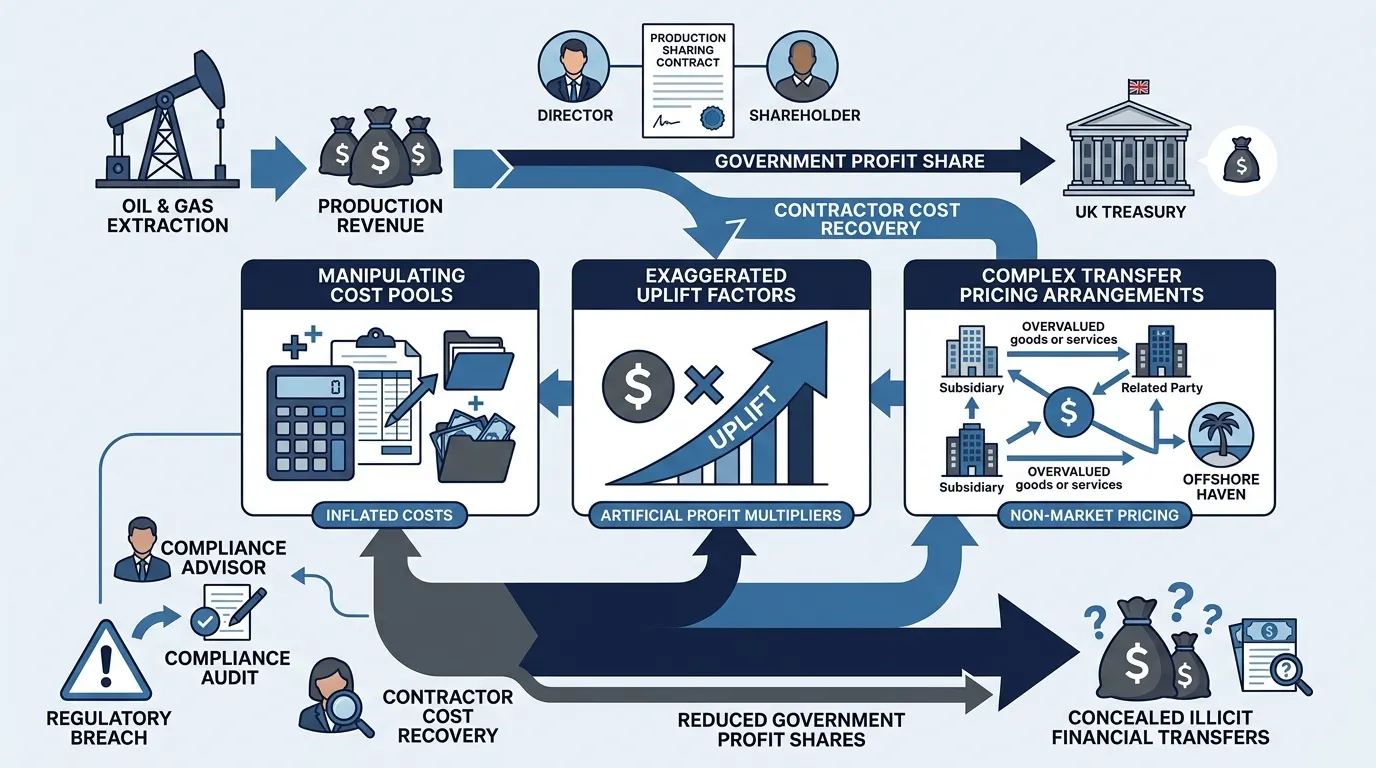
International petroleum exploration operates extensively under Production Sharing Contracts where host governments grant extraction rights to international oil companies in exchange for a share of produced hydrocarbons after cost recovery. Contractors recover exploration and development expenditures from early production revenues before splitting remaining profit oil, incentivizing operators to inflate recoverable costs and accelerate cost recovery timelines. Forensic investigators examine cost recovery statements to identify capital expenditures that violate contract definitions, such as excessive home office overhead allocations, unapproved exploration drilling dry holes, and inflated financing costs.
Transfer pricing manipulation occurs when multinational operators sell crude oil or natural gas to foreign affiliate trading arms at below-market transfer prices, depressing taxable revenues in the host jurisdiction and shifting profits to low-tax entities. Forensic economists utilize comparable uncontrolled price methods and transactional net margin methods to benchmark international commodity sales against independent market indexes. Investigators audit production measurement systems, known as fiscal metering stations, to determine if volumetric reporting has been manipulated to understate gross production volumes before cost oil calculations occur. Document reviews focus on technical service agreements between operating subsidiaries and parent companies, verifying whether charged management fees correspond to tangible services delivered on-site. Resolving these multi-jurisdictional financial investigations requires sophisticated data integration models that reconcile physical petroleum custody transfer points with consolidated financial statements.
Frequently Asked Questions
What are the key compliance requirements in the oil and gas sector?
Oil and gas compliance mandates strict adherence to environmental regulations, health and safety standards, anti-bribery laws, and international trade controls. Organizations utilize specialized frameworks provided by the Institute For Oil & Gas Training to ensure petroleum operations, joint ventures, and asset transfers meet regulatory expectations across global jurisdictions.
How does anti-money laundering (AML) apply to petroleum transactions?
Petroleum trading involves complex cross-border payments, shell companies, and high-value capital transfers that attract money laundering risks. Robust AML protocols implemented through Oil and Gas Petroleum Compliance, AML & Risks programs require thorough customer due diligence, ultimate beneficial ownership verification, and continuous transaction monitoring.
What are the primary financial risks in oil and gas operations?
Key financial risks encompass market volatility, cost recovery disputes in production sharing contracts, joint interest billing discrepancies, and procurement fraud. Managing these exposures requires targeted risk assessment strategies and professional workforce development programs focused on internal audit and forensic financial control.
Why is anti-bribery and corruption (ABC) compliance critical for energy companies?
Energy exploration often occurs in regions with high perceived corruption indices, exposing organizations to severe penalties under legislation such as the UK Bribery Act and the US Foreign Corrupt Practices Act. Comprehensive training initiatives from the Institute For Oil & Gas Training equip corporate compliance teams with the tools to identify red flags, audit third-party intermediaries, and maintain transparent accounting records.
How do oil and gas companies mitigate regulatory and operational risks?
Companies mitigate regulatory and operational risks by establishing robust internal controls, deploying automated transaction monitoring systems, and conducting regular compliance audits. Enrolling personnel in targeted Oil and Gas Petroleum Compliance, AML & Risks training ensures teams remain aligned with evolving international legal frameworks and industry standards.
Related training courses
JV Accounting & Partner Reporting for Operators Training Course
- Specialisation
- Oil & Gas Petroleum Accounting
- Duration
- 5 days · 15 CPD hours
JV Accounting & Partner Reporting for Non-Operators Training Course
- Specialisation
- Oil & Gas Petroleum Accounting
- Duration
- 5 days · 15 CPD hours
Regulatory Compliance for Petroleum Entities Training Course
- Specialisation
- Oil & Gas Petroleum Compliance, AML & Risks
- Duration
- 5 days · 15 CPD hours
More articles

Detecting Procurement, Vendor and Payment Irregularities Through Forensic Accounting
Discover how forensic accounting detects procurement fraud, vendor collusion, and payment irregularities in capital-intensive energy operations.
Read article →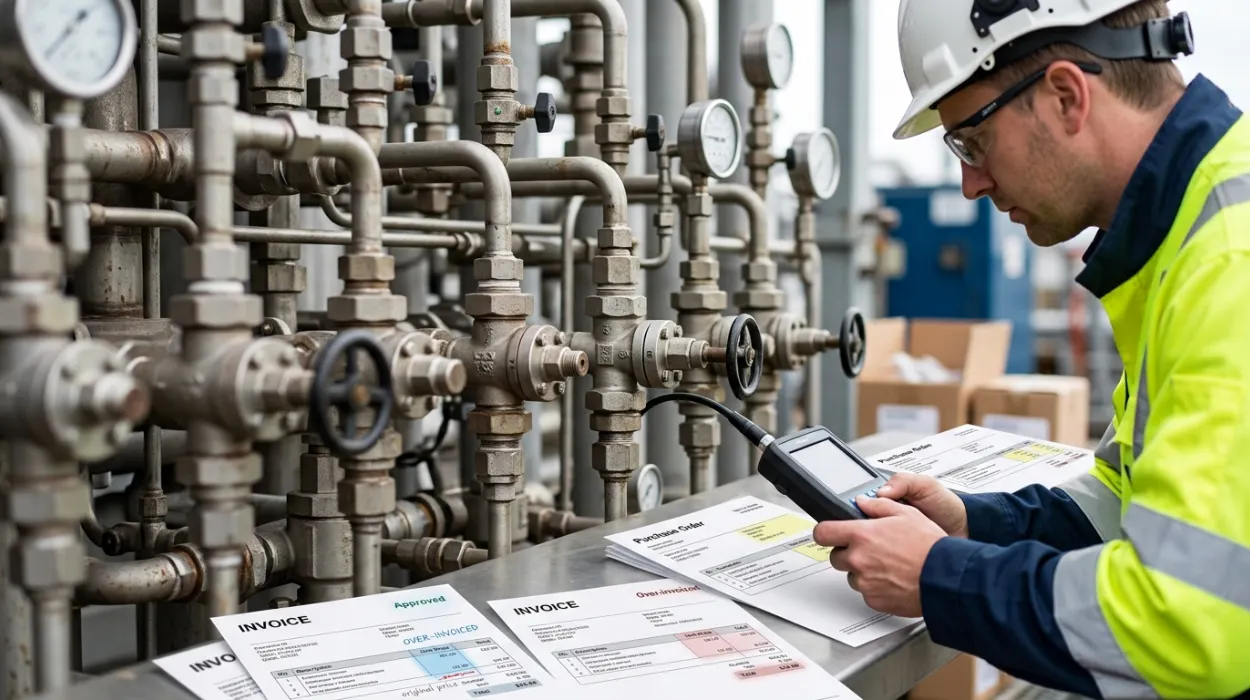
Why Procurement and Contractor Payments Create Fraud Exposure in Oil & Gas
Discover how oil and gas companies mitigate procurement fraud and contractor payment risks through targeted workforce training and internal controls.
Read article →
Fraud Risks in Petroleum Operations Training: What Oil & Gas Professionals Can Gain
Explore the Fraud Risks in Petroleum Operations Training course syllabus, learning outcomes, curriculum, and enrollment details to secure your career.
Read article →