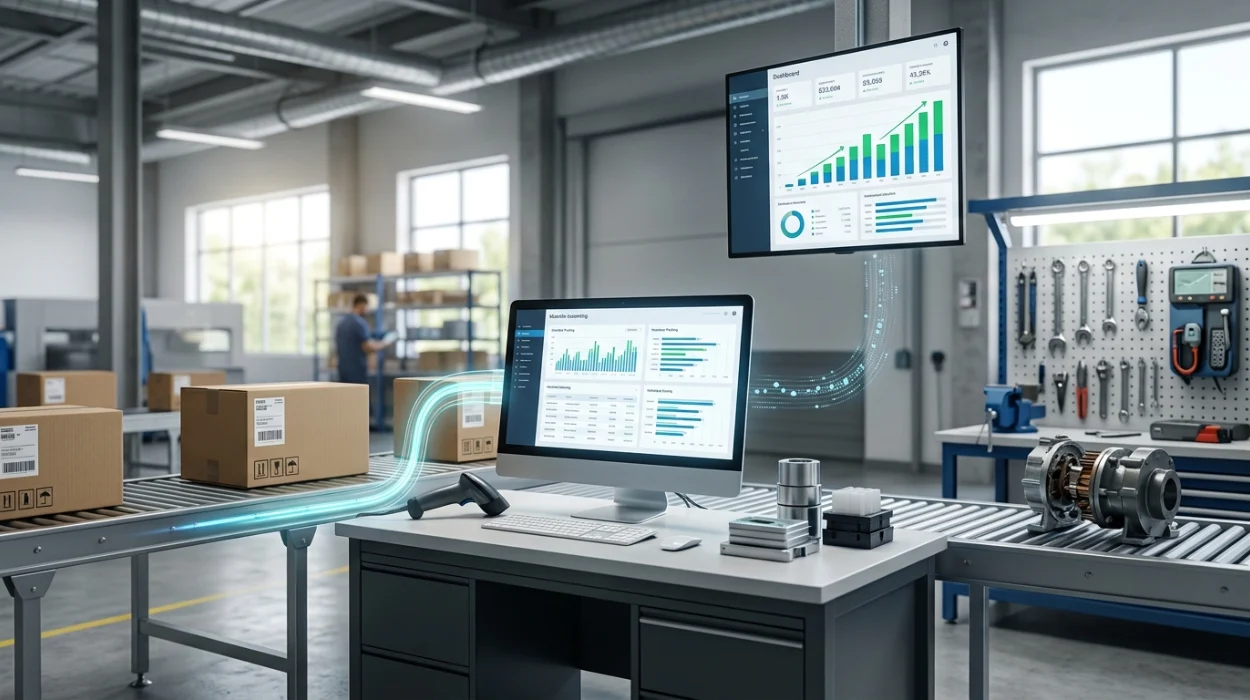
Materials accounting establishes an unbroken data pipeline between inventory acquisitions managed by procurement teams and general ledger financial statements, ensuring every physical valve, pipe, and chemical barrel is assigned an accurate monetary valuation before upstream asset depreciation occurs.
Procurement operations initiate the supply chain lifecycle by issuing purchase orders for operational assets, drilling consumables, and extraction machinery. Without a synchronized accounting framework, procurement expenditures remain isolated inside purchasing ledgers as short-term cash outflows rather than capitalized inventory or operational expenditure. Upstream financial reporting demands strict adherence to regulatory standards such as International Financial Reporting Standards or Generally Accepted Accounting Principles. These frameworks require exact capitalization schedules and depreciation tracking for all physical assets deployed across exploration and production sites.
Financial controllers rely on materials accounting systems to reconcile physical stock levels against purchase order invoices and delivery receipts. When procurement teams acquire high-value assets, accounting software records these items within specific inventory sub-ledgers. This process prevents cost misallocation between capital expenditures and operating expenditures. Organizations exploring foundational inventory management principles often examine Where Inventory and Materials Costs Enter the Upstream Accounting Cycle to understand how initial warehouse receipts transition into general ledger entries. This systemic linkage ensures that balance sheets reflect accurate inventory valuations while income statements capture consumption expenses during actual extraction phases.
What Financial Impact Do Maintenance Costs Have on Upstream Materials Inventories?
Unplanned equipment maintenance and recurring preventive servicing directly deplete materials inventory balances, converting spare parts from dormant balance sheet assets into immediate operational expenditures that alter quarterly net income figures.
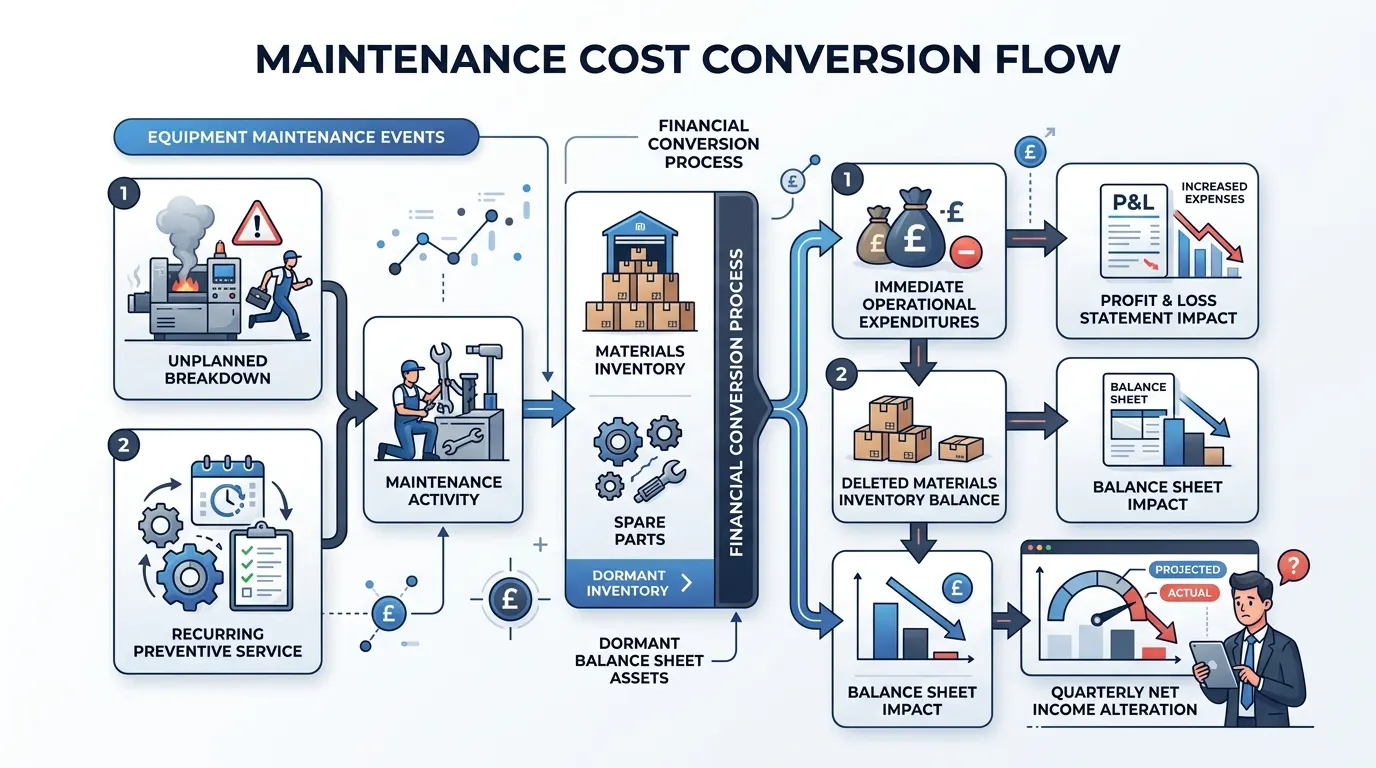
Upstream oil and gas operations depend heavily on heavy machinery, offshore drilling platforms, and subterranean extraction pumps that experience severe physical wear. Maintenance engineering teams frequently draw replacement components—such as downhole drill bits, hydraulic seals, and compressor valves—directly from storage yards and regional warehouses. Materials accounting tracks these inventory movements through specific stock-issue slips, debiting maintenance expense accounts while crediting materials inventory ledgers.
When maintenance demands spike due to unexpected asset failures, inventory turnover accelerates beyond initial financial forecasts. Finance departments must evaluate whether replacement parts represent routine maintenance expenses or capital improvements that extend the useful life of major extraction assets. If maintenance teams consume critical inventory without proper accounting oversight, asset valuations become distorted. This distortion misleads executive leadership regarding the true operational efficiency of specific extraction blocks. Organizations addressing these complex skill requirements often utilize Petroleum Industry Accounting Fundamentals: Developing Practical Accounting Skills for Upstream Operations to train finance personnel on accurate cost-allocation methodologies. Proper categorization protects gross margins and ensures that maintenance expenditures align directly with asset productivity metrics.
Why Must Procurement Strategies Align Directly with Upstream Financial Reporting Standards?
Procurement strategies dictate the timing of cash outflows and liability recognition, requiring absolute synchronization with financial reporting periods to prevent fiscal discrepancies during quarterly audits and regulatory disclosures.
Procurement professionals negotiate volume discounts, long-term supply contracts, and vendor payment terms that influence corporate cash flow and working capital efficiency. However, purchasing decisions executed without accounting visibility create significant reporting vulnerabilities. If procurement teams acquire excessive raw materials or specialized drilling supplies without coordinating with finance departments, warehouses accumulate obsolete inventory. This accumulation forces organizations to record significant inventory write-downs, which directly reduce operating profit.
Upstream financial reporting mandates that inventory valuation accounts reflect the lower of cost or net realizable value. When market commodity prices drop or specialized extraction assets become obsolete, procurement data must inform immediate accounting adjustments. Strategic alignment guarantees that purchase commitments match production demand schedules, thereby stabilizing balance sheet ratios. Finance teams leverage these integrated workflows to satisfy external auditors, institutional investors, and regulatory bodies demanding transparent reporting of asset values, supply chain liabilities, and operational expenditures.
How Can Corporate Training Bridge Skills Gaps Between Procurement, Maintenance, and Finance Teams?
Structured corporate training programs dismantle departmental silos by educating cross-functional workforces on the financial consequences of supply chain decisions, turning isolated buyers and engineers into financially literate contributors.
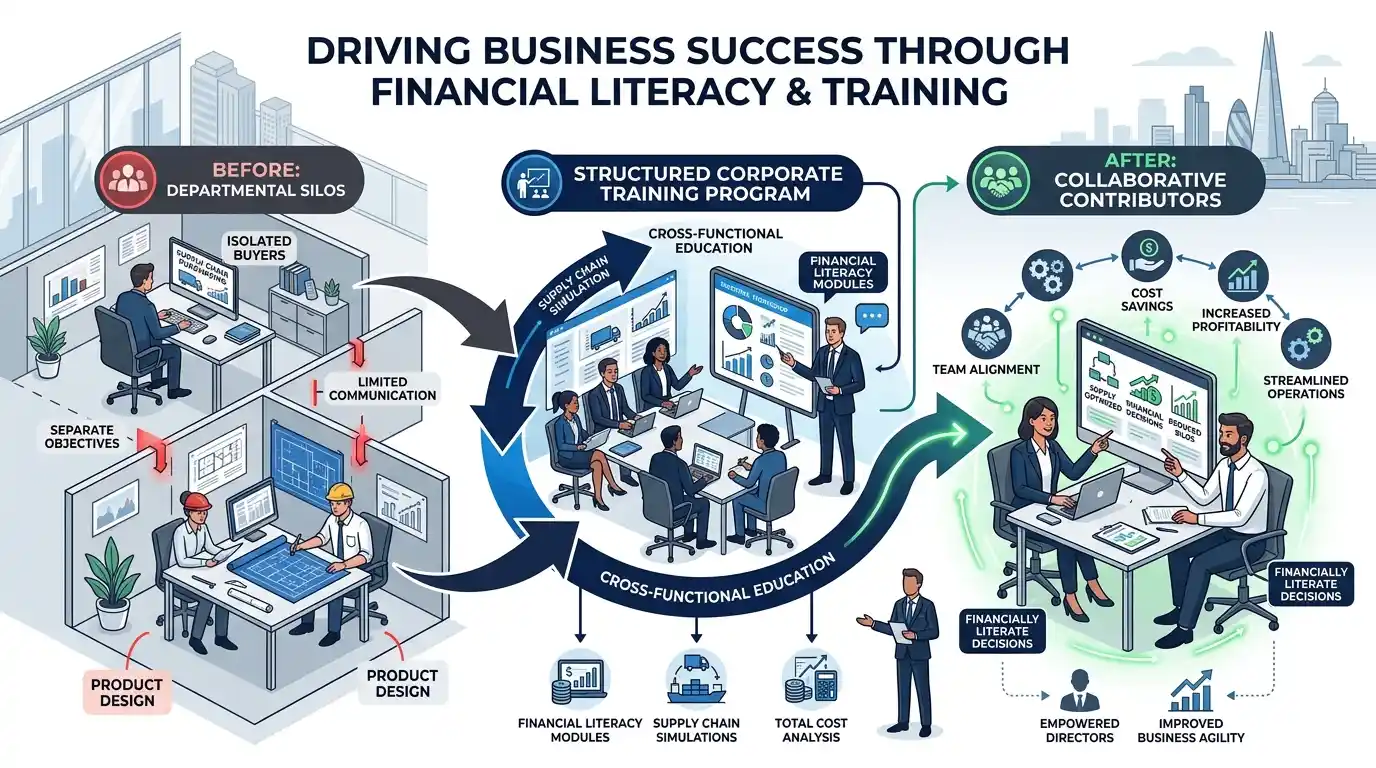
Corporate human resources departments in the energy sector frequently identify critical capability gaps between operational field engineers, procurement specialists, and corporate accountants. Procurement teams focus on vendor negotiations and delivery speed. Maintenance technicians prioritize asset uptime and mechanical reliability. Accountants concentrate on regulatory compliance and variance analysis. When these departments operate without shared understanding, materials accounting errors multiply, leading to disputed invoices, delayed financial closes, and inaccurate asset valuations.
Effective workforce development utilizes blended learning models, combining technical workshops with real-world case studies to demonstrate how operational choices impact financial statements. Professionals seeking comprehensive skill enhancement frequently enroll in the Institute For Oil & Gas Training to master integrated financial frameworks. These programs emphasize practical application, teaching participants how to track inventory from initial purchase requisition through maintenance consumption to final financial statement disclosure. By fostering cross-functional data literacy, organizations eliminate departmental friction, accelerate financial closing cycles, and secure measurable improvements in overall operational profitability.
Frequently Asked Questions
What does oil and gas petroleum accounting involve?
Oil and gas petroleum accounting encompasses specialized financial tracking methods tailored for upstream, midstream, and downstream energy operations. Through programs at the Institute For Oil & Gas Training, professionals learn how to manage complex cost-pooling, depletion, depreciation, and amortization principles unique to natural resource extraction. This specialized discipline ensures compliance with international financial reporting standards while accurately measuring asset valuations across exploration projects.
Why is petroleum accounting different from standard corporate accounting?
Petroleum accounting diverges significantly from standard corporate accounting due to the high-risk, capital-intensive nature of exploration and production lifecycles. Practitioners must master specialized cost-treatment methods, such as successful efforts and full cost accounting, to evaluate asset viability accurately. The Institute For Oil & Gas Training equips finance teams with the exact technical skills required to navigate joint venture audits, production sharing contracts, and regulatory reporting mandates.
How do upstream companies handle exploration and evaluation expenses?
Upstream energy firms capitalize or expense exploration and evaluation expenditures based on whether commercially viable reserves are discovered within specific leaseholds. Accountants monitor seismic data acquisition, drilling permits, and geological surveys to determine exact asset cost allocations before production begins. Comprehensive training from the Institute For Oil & Gas Training helps accounting personnel correctly classify these expenditures to maintain transparent balance sheets for investors and regulators.
What are joint interest billings in oil and gas accounting?
Joint interest billings represent the financial mechanism used by operating partners to bill non-operating working interest owners for their proportionate share of exploration, development, and operating expenses. Accurate joint interest accounting prevents cost disputes and ensures timely capital recovery across complex multi-party drilling ventures. Industry professionals utilize specialized educational pathways at the Institute For Oil & Gas Training to master joint venture cost-recovery audits and billing reconciliation processes.
How does production accounting link field operations with general ledgers?
Production accounting bridges physical extraction volumes with financial reporting by tracking extracted hydrocarbons from wellhead measurement points to custody transfer terminals. This discipline ensures that revenue distributions, royalty payments, and severance taxes are calculated using verified volumetric data. The Institute For Oil & Gas Training provides targeted instruction on reconciling field production metrics with general ledger revenue accounts to protect profit margins and satisfy statutory compliance.
Related training courses
Ethics, Governance & Anti-Corruption: Frameworks & Codes Training Course
- Specialisation
- Oil & Gas Petroleum Compliance, AML & Risks
- Duration
- 5 days · 15 CPD hours
Financial Evaluation of Suppliers & Contractors: Tender Evaluation Training Course
- Specialisation
- Oil & Gas Petroleum Procurement
- Duration
- 5 days · 15 CPD hours
Cash Calls, AFEs & Work Program/Budget Control: Preparation Training Course
- Specialisation
- Oil & Gas Petroleum Budgeting & Cost Control
- Duration
- 5 days · 15 CPD hours
More articles
NPV, IRR & Fiscal Sensitivity Analysis Training for Oil & Gas Project Evaluation Professionals
Master NPV, IRR, and fiscal sensitivity analysis for upstream petroleum projects with structured professional training.
Read article →
Assessing Project Returns Under Changing Oil Prices, Costs and Petroleum Fiscal Terms
Evaluate upstream oil and gas project returns under changing commodity prices, cost inflation, and petroleum fiscal terms with expert financial models.
Read article →
How Fiscal Terms Can Change the Investment Case for an Oil and Gas Project
Discover how fiscal terms training equips oil and gas workforces to evaluate project returns, optimize capital allocation, and navigate regulatory complexity.
Read article →